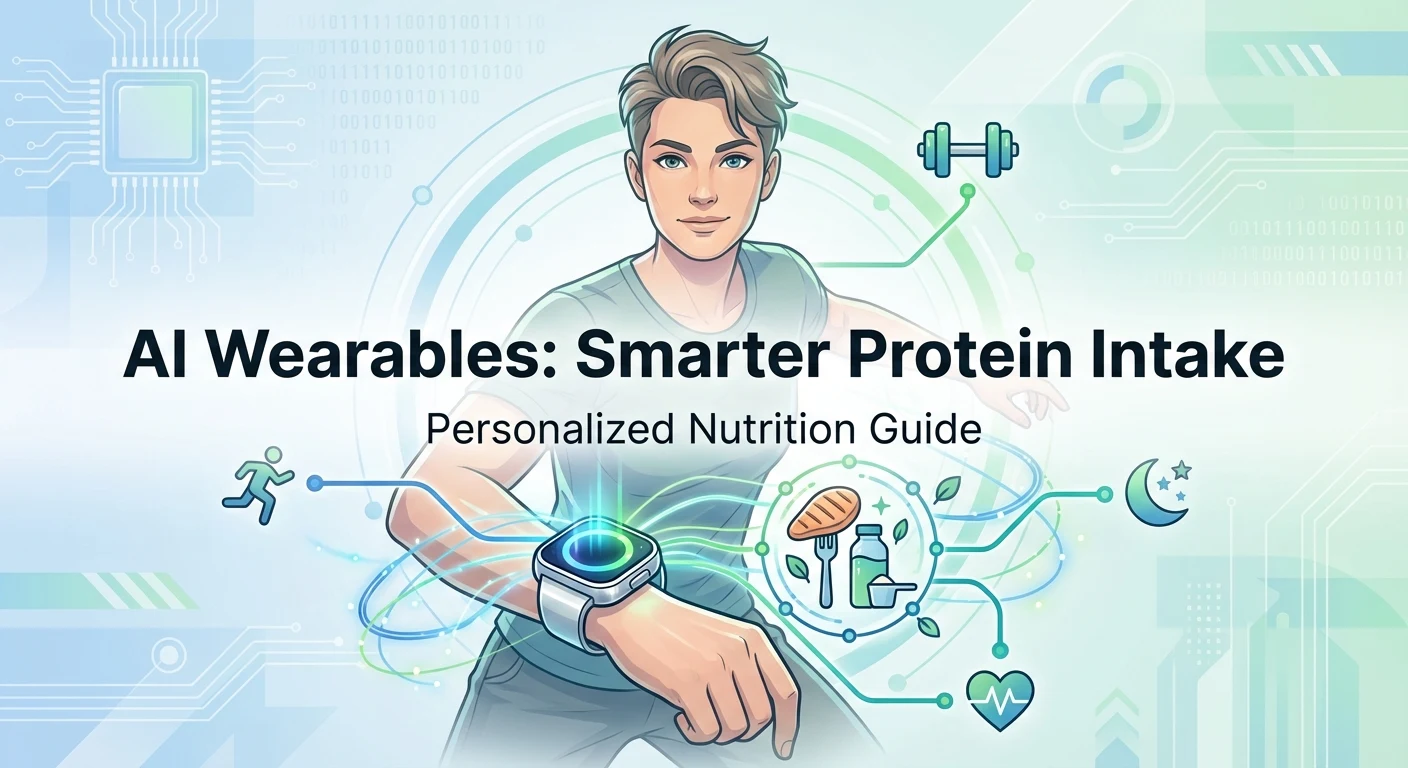
AI Wearables: Smarter Protein Intake by 2026
Struggling to track protein? AI wearables are making it easier to personalize your intake by 2026. Discover how these smart devices offer realistic hints for your daily needs.
You’ve worked out, but then you're left wondering if you should eat more chicken breast for dinner or if you can skip it. It's a common dilemma. On busy days, diet decisions often come down to guesswork, and smartwatches frequently end up just counting steps.
That's changing. AI wearables are now starting to offer more realistic guidance on how much protein you need, tailored to your body's condition each day.
The combination of AI and wearables is rapidly growing in health management. At CES 2026, AI-powered health coaches managing nutrition, exercise, and sleep together were highlighted as a key trend, with non-invasive biosensor technology also gaining significant attention. The focus is shifting from simple data logging to how that data can be directly linked to your dietary choices.
Why Protein, Specifically?
Protein isn't just for muscles. It's also involved in the creation and repair of muscle tissue, enzyme and hormone production, immune function, and the maintenance of bones, skin, and hair.
Protein becomes even more crucial, especially if you're trying to lose weight or if your activity levels fluctuate. Eating too little indiscriminately can lead to muscle loss even as you shed pounds. That's why "eating what's right for your situation" is more important than simply "eating a lot."
This is where wearables clearly come into play: reading your body's condition and more precisely estimating the amount you need for that specific day.
What Do AI Wearables Actually Monitor to Make Recommendations?
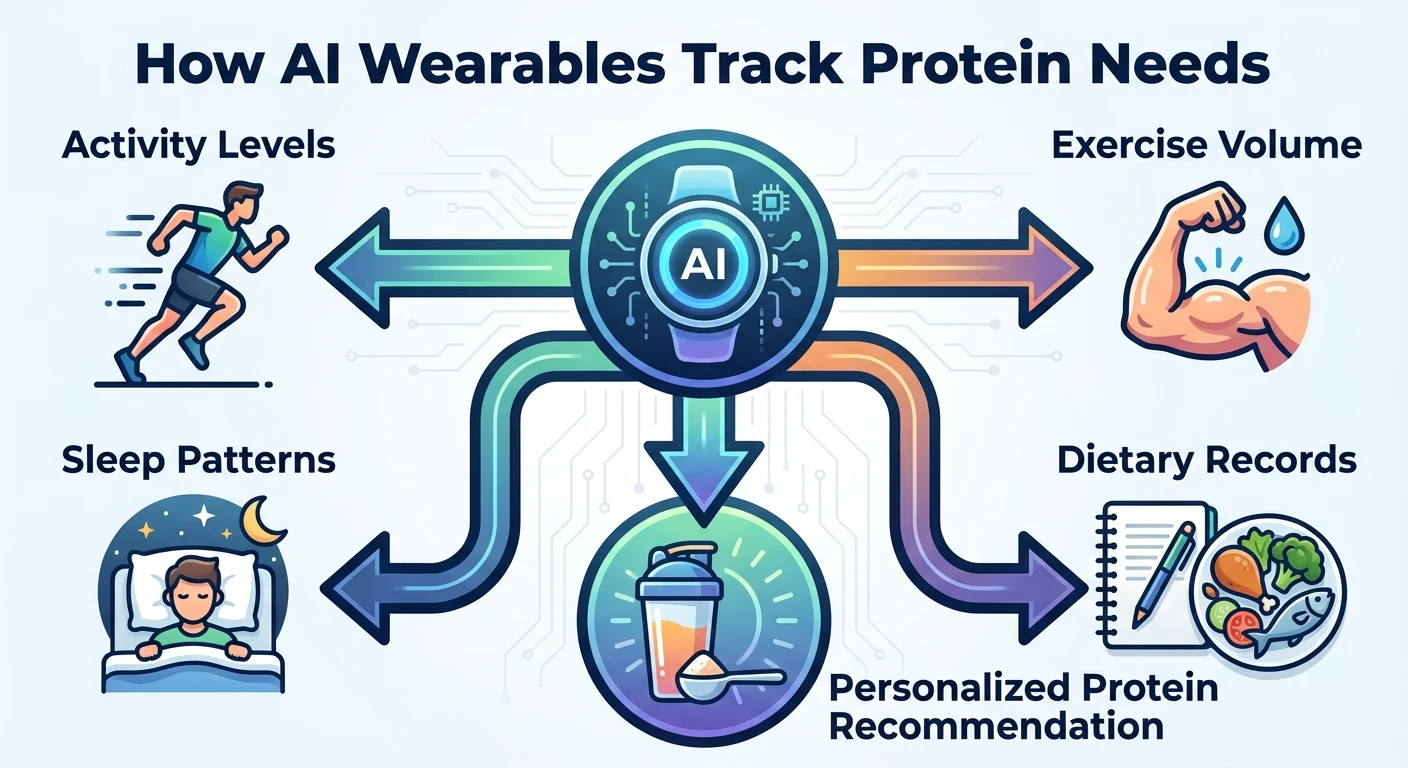
Current AI wearables don't directly measure protein levels in your blood to give recommendations. They are closer to estimating your needs by combining information like activity levels, exercise volume, sleep patterns, heart rate, and dietary records.
It's important to set realistic expectations. Rather than directly measuring "exactly how many grams of protein metabolism you're short today," it's more about personalized calculations based on your activity and records, suggesting "you likely need more protein today than usual." This is why how you use it is so important.
Protein Recommendations: Simple Numbers, Personal Application
Generally, the daily recommended protein intake for adults is about 0.8 to 1 gram per kilogram of body weight. However, this range can vary significantly depending on your activity level and goals.
For muscle gain, 1.6 to 2.2 grams per kg might be recommended, and for fat loss, it could be 2.0 to 2.4 grams per kg. For a 70kg individual, this translates to roughly 56-70g per day for general health maintenance, or about 112-154g if aiming for muscle growth.
Jumping to add two protein shakes immediately might not be the best approach. These numbers are merely reference ranges; actual intake should vary based on your activity, eating patterns, and any existing health conditions. The real benefit of AI wearables isn't to make you memorize numbers, but to connect them to your daily lifestyle.
Practical Use: Realistic Ways to Meet Your Daily Protein Needs
Before work, check your wearable's sleep and recovery status. If you had an intense workout the day before and your recovery metrics are low, it's more realistic to spread out your protein intake starting from breakfast.
Around lunchtime, review your activity and meal logs. Even a rough record, whether through photos or manual entry, gives you a sense of "how much I've already eaten today" by dinner. This makes it easier to avoid both under- and over-eating compared to just guessing.
On workout days, rather than consuming all your protein immediately post-workout, first ensure your total daily intake is adequate. Your wearable can help estimate if your recovery burden was higher than usual, based on your movement and heart rate data for the day.
The core idea is simple: a wearable is most useful when seen not as a "machine that gives definitive answers," but as a "tool that more frequently shows you hints about your body."
Trust, But Verify: Don't Follow Blindly
While AI wearables are convenient, their accuracy isn't always perfect. Food recognition might be incorrect, or the interpretation of collected biometric data might not align with your actual physical condition.
Excessive protein intake is also a point of caution. Consuming too much for too long can strain your liver and kidneys, and potentially lead to issues like indigestion or gout. If you have pre-existing conditions like kidney disease, the approach of "I'm exercising, so I can eat a lot" can be risky.
Privacy is another consideration. Having your activity levels, diet, and biometric signals all stored within one app means a collection of sensitive information. It's wise to check what data is collected and how it's stored.
Disclaimer: Wearable recommendations are not medical diagnoses. If you have kidney disease, gout, metabolic disorders, or are taking medication, it's safer to consult with a healthcare professional before significantly increasing your protein intake.
What to Expect by 2026, and What Still Needs Time
There are clear reasons for optimism. AI wearables are evolving to integrate nutrition, exercise, and sleep, rather than treating them in isolation. For busy professionals, this integrated approach could be the biggest advantage.
However, there are still areas that require cautious observation. Currently, wearables are not at a stage where they directly measure protein metabolic status to provide precise recommendations. Furthermore, robust long-term data on how much they actually boost long-term health goal achievement is still insufficient.
The most realistic approach right now is this: rather than believing in an exaggerated future, start by using them as a tool to gain a slightly more accurate view of your daily life. That initial step alone can significantly change how you manage your diet.
Conclusion
The core of protein management isn't just about advanced technology itself, but about "the attempt to view your body's specific needs through data, not just intuition." Protein isn't simply good because you eat a lot; it gains meaning when adjusted to your activity levels and goals.
If you're already using a wearable, there's no need to start with grand ambitions. Just for this week, try looking at your sleep, activity, and meal records together, and assess your protein intake based on your total daily consumption. That small change can be the first step in shifting your health management from "others' standards" to "your body's own standards."