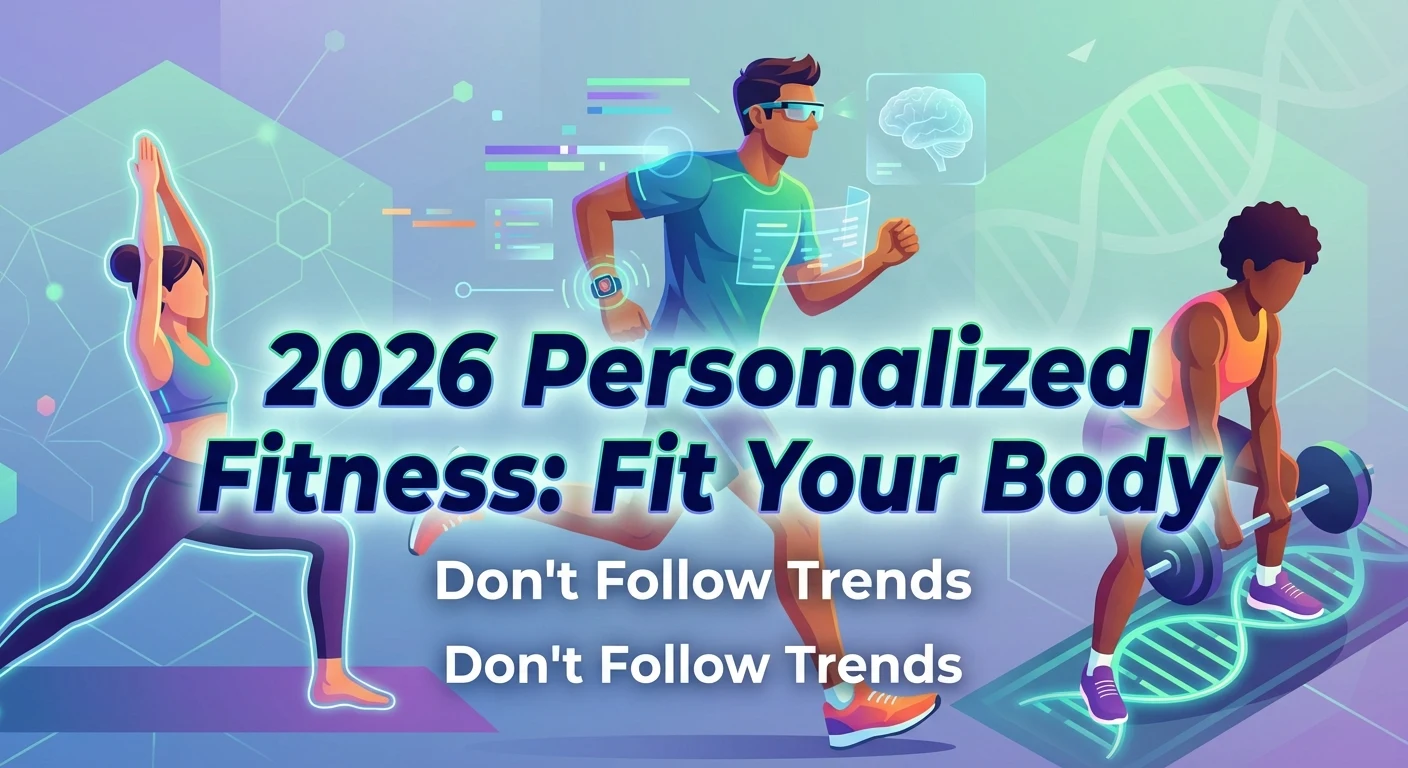
2026 Personalized Fitness: Tailor Workouts to Your Body
Discover 2026's top personalized fitness trends. Learn how AI, wearables, and DNA analysis can help you create a sustainable workout routine that truly fits your body and lifestyle.
Ever felt uniquely exhausted or give up after just a few days, even when following popular workout routines? You know you need to exercise, but you're short on time and unsure where to start.
The fitness landscape of 2026 begins with a new question: not 'What's the best workout?' but 'What truly fits my body and schedule?' From AI coaching apps and wearables to DNA-based analysis, technology is already heading in this direction. The real challenge is integrating these tools into your daily life.
Why Personalized Fitness is the New Standard
Your body's response to exercise is far more individual than you might think. Even with the same routine, results can vary significantly based on your sleep quality, recovery rate, and daily stress levels.
In 2026, attempts to bridge these differences with technology are becoming more concrete. This is precisely why hyper-personalized healthcare, combining AI, big data, and genetic analysis, is emerging as a realistic option. It's not just a passing trend; it signifies that we now have more specific clues to answer the age-old question: 'Why do I react differently?'
2026 Personalized Fitness Trends: What's New?
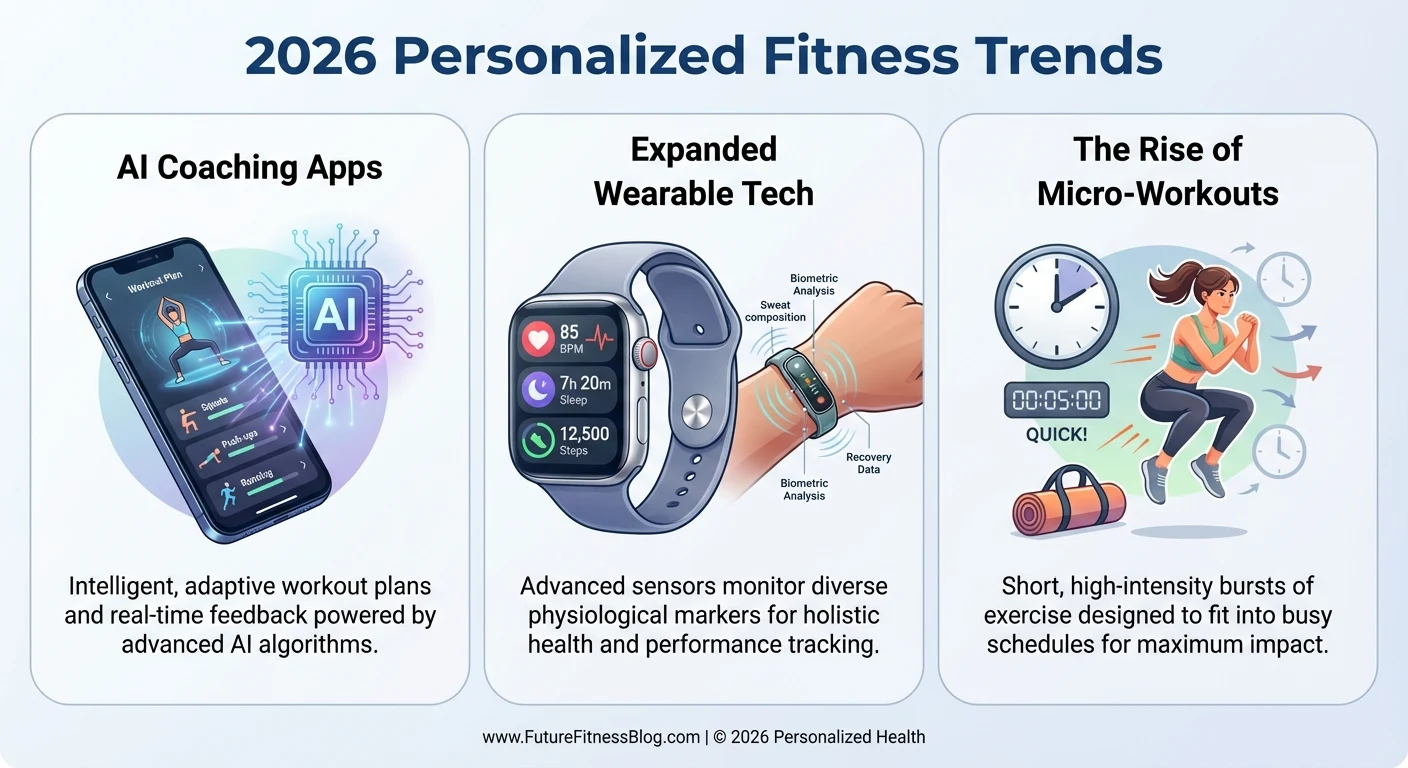
AI Coaching Apps AI coaching apps can analyze your form via camera and adjust your routine in real-time based on your workout history and goals. Feedback that once required a personal trainer (PT) is now available on your smartphone. While not perfect, it's a significant game-changer for those who exercise alone.
Expanded Wearable Tech Step counting is just the beginning. Heart rate, HRV (Heart Rate Variability), sleep scores, stress levels, and even blood oxygen saturation – this data helps you gauge whether your body is ready for a workout today or if it's a day for rest. At CES 2026, personal-centric health management based on wearables and home sensors was highlighted as a major trend.
The Rise of Micro-Workouts Short, high-efficiency routines lasting around 5 to 10 minutes are becoming a realistic option for busy professionals and parents. Smart yoga mats, indoor cycles, and AI-powered bodyweight exercise apps are supporting this trend.
The key isn't to follow all these trends, but to choose what best fits your specific situation.
Practical Application for Busy 30-50 Somethings
You don't need a grand start for personalized fitness. Initially, it's better to look at your lifestyle patterns before diving into data.
If your mornings are always hectic, a 7-minute pre-work routine is far more sustainable than a planned 40-minute evening session. If you're exhausted after work, moving for 10 minutes daily is more effective than trying for three long workouts a week. The guiding principle is simple: Prioritize workouts you can consistently stick with, over those you're just 'good' at.
Adjust your approach based on your situation:
| Situation | Recommended Approach |
|---|---|
| Busy professionals with little time | 5-10 minute micro-workouts + one longer session on weekends |
| Homemakers needing to stay active at home | 10 minutes of bodyweight strength + short walks |
| Those who often give up on exercise quickly | Use an AI app just to log activity, start with low intensity |
| Individuals with slow recovery | Refer to heart rate/sleep patterns to reduce high-intensity sessions |
Viewed this way, personalized fitness isn't primarily about cutting-edge technology; it's about developing a habit of listening to your body's signals and respecting your lifestyle constraints.
How to Effectively Use Wearables and AI Apps
Wearable data is useful for understanding your body's recovery status today. It can genuinely help you avoid overtraining and adjust intensity according to your condition.
However, you must draw a clear line. Wearable metrics are reference indicators, not substitutes for medical diagnosis. It's much more realistic to interpret weekly averages or recent trends rather than getting swayed by a single day's reading.
AI workout apps can assist with form correction, routine recommendations, and progress tracking – but if you experience unusual symptoms like pain, dizziness, or breathing difficulties, professional consultation should always take precedence over app advice.
Caution: Health data is sensitive personal information. When choosing apps or devices, verify not only their features but also their data storage methods and whether they share data with third parties.
DNA-Based Workouts & Diets: How Much Can You Trust?
Genetic personalized services are rapidly growing in areas like diet, health strategies, and exercise suitability recommendations. Some studies suggest specific genes may be linked to fast-twitch muscle development, endurance, and muscle growth, and there are reports of DNA-tailored diets helping with blood sugar control.
This is fascinating information, especially because it can offer clues to the question, 'Why do I react differently even when doing the same workout?'
However, it's important to manage expectations calmly. The long-term effects and widespread commercialization of DNA-based workout methods are still under research. While DNA information can serve as a reference for direction, it's premature to solely determine exercise outcomes based on it.
A realistic approach is this: if you have DNA information, use it as a reference, but make your actual routine decisions by integrating it with your current fitness level, presence of pain, sleep, and overall lifestyle rhythm. Your body responds more truthfully to today's condition than to a test report.
Your First Week's Personalized Routine
You don't need to design a complex plan from the start. Just decide on these basics:
- Workout Time: 10 minutes a day or 20 minutes, 3 times a week
- Location: Home, gym, or outdoors – whichever you can consistently access
- Key Metrics: Focus on sleep quality, fatigue levels, and post-workout recovery, rather than just weight
- Tools: Start with just one, like a smartwatch or an app
The goal isn't a perfect routine; it's a routine that seamlessly integrates into your life. The personalized fitness trend isn't about finding a more extraordinary workout, but rather a more sustainable way to stay active. Instead of chasing fleeting fads, establish one small routine that works for you.