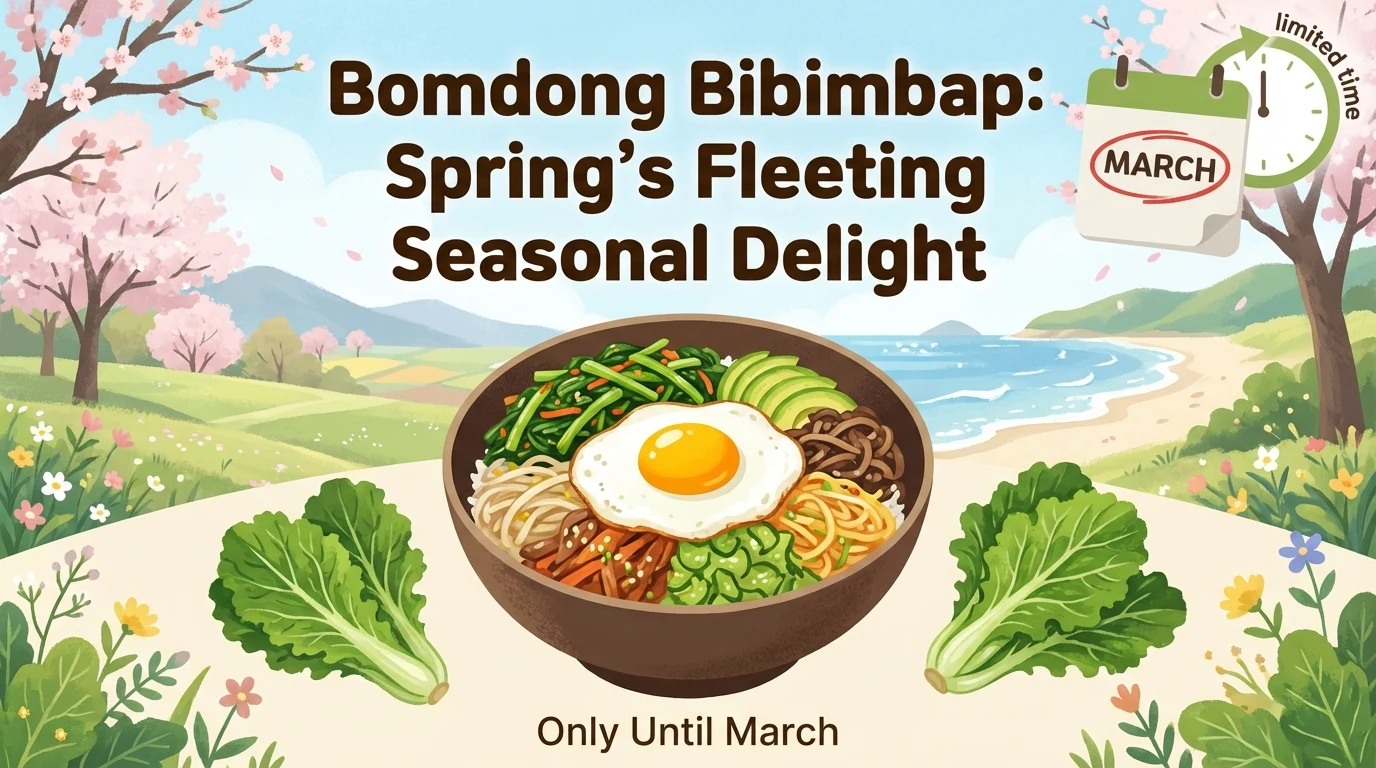
Bomdong Bibimbap: A Spring Dish That Disappears After March
Discover Bomdong Bibimbap, a unique Korean spring delicacy. Learn why this seasonal dish, available only from January to March, is a must-try and where to savor its authentic flavors.
You've probably opened a list of restaurants for a spring trip, only to end up booking nothing. Amidst places with many reviews but no compelling reason to eat there now, Bomdong Bibimbap stands out with a clear purpose. It features a seasonal vegetable that reaches its peak flavor only between January and March.
Bomdong may look similar to regular cabbage, but its texture is different. Its leaves don't curl inward but spread out widely. By enduring the cold, it accumulates sugars, resulting in a distinct sweetness and a prolonged crisp texture compared to regular cabbage. Just a plate of lightly seasoned geotjeori (fresh kimchi-style salad) made with this vegetable can transform a bowl of rice.
Why Bomdong Bibimbap Now
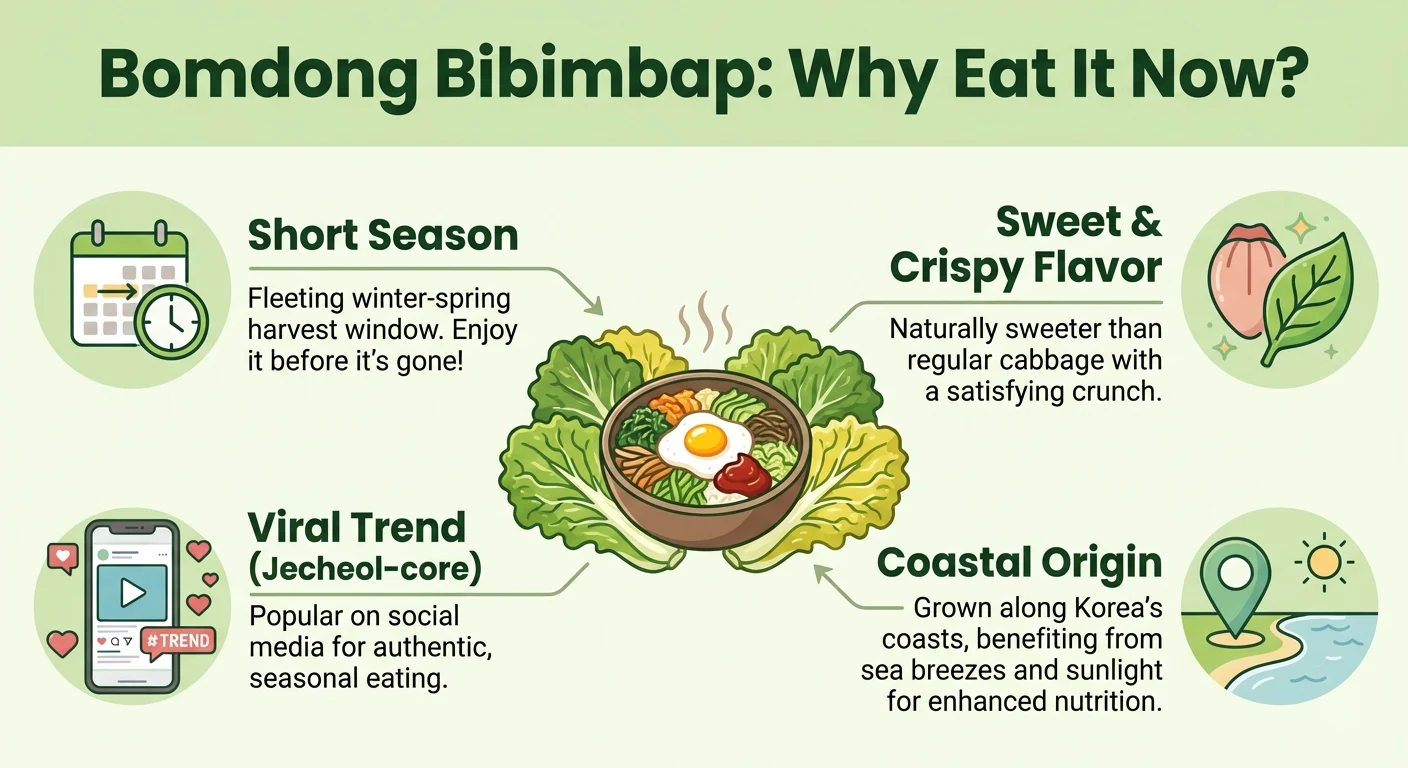
As Health Kyunghyang points out, Bomdong's peak season is short, lasting only from January to March. The sugars accumulated by enduring the cold are the source of its sweet and savory flavor, a taste that fades with time.
Recent trends have further amplified its popularity. According to ZDNet Korea, a short-form video of Kang Ho-dong eating Bomdong geotjeori bibimbap on the variety show '2 Days & 1 Night' went viral, surpassing 5 million views. This coincided with the 'Jecheol-core' (seasonal core) trend, focusing on eating seasonal ingredients, particularly among Gen Z. The retail industry has responded quickly, with GS25 even launching a 'Bomdong Geotjeori Bibim Set' lunchbox.
Its short season, distinct flavor, and the fact that you have to wait until next year if you don't eat it now – these reasons alone make this dish highly sought after.
Where to Go — Jeonnam's Southwest Coast is the Starting Point
According to JoongAng Ilbo, over 70% of Korea's Bomdong is produced in the southwestern coastal regions of Jeollanam-do, including Haenam-gun, Jindo-gun, and Wando-gun. Bomdong from these areas, grown with the sea breeze, is often cited for its superior taste and quality.
However, to be frank, based on currently available information, it's difficult to confidently list specific Bomdong Bibimbap specialty restaurants by region. Instead, here are some practical criteria: Korean restaurants in the Southern region close to Bomdong production areas, baekban (Korean set meal) restaurants known for strong seasonal side dishes, and eateries near local food markets are much more realistic choices.
A travel route covering Haenam, Jindo, and Wando is straightforward. A day trip that includes seeing the sea, enjoying a seasonal vegetable meal for lunch, and buying a bag of Bomdong at a market fits perfectly with exploring this region.
What to Look For in a Restaurant
The basic preparation of Bomdong Bibimbap is simple. According to Man-gae's Recipe, Bomdong is lightly washed, seasoned with sesame oil, garlic, red pepper powder, and salt like geotjeori, then placed over warm rice, topped with an egg, and drizzled with perilla oil before mixing. It's not complex, so the quality of the ingredients shines through.
A good Bomdong Bibimbap offers crispness and sweetness first with the initial spoonful. If the seasoning or oil aroma comes before that, the Bomdong isn't truly the star. Is the Bomdong lightly seasoned like geotjeori? Does the sesame oil aroma not overpower the vegetable's taste? Are seasonal side dishes served alongside? Restaurants that meet these three criteria have a low chance of disappointment. These are standards to check on the table, rather than just relying on the name 'Bomdong Bibimbap'.
Why It's Light Yet Satisfying
According to HealthO, Bomdong contains about twice as much calcium, six times more beta-carotene, and twice as much Vitamin C as regular cabbage. When heavy, oily meals are common during travel, Bomdong Bibimbap is especially welcome because it feels light yet fulfilling. Green Economy reports that potassium in Bomdong can help with sodium excretion and blood circulation. While this doesn't imply treatment for specific diseases, having a meal that isn't overly heavy during a trip with lots of walking is a surprisingly important factor.
Caution: Sauces with excessive anchovy sauce, soy sauce, or plum extract can increase sodium and sugar intake. Those needing to manage blood pressure or sugar levels should confirm the sauce intensity before ordering. If you generally have a cold or sensitive stomach, enjoy it lightly with warmer ingredients like chili and green onions. This isn't meant to scare you, but rather a small tip to keep your stomach comfortable while traveling.
This Spring, Give It a Try
If you're planning a trip to Jeonnam's southwest coast, try to fit a bowl of Bomdong Bibimbap into your itinerary. Focusing on Southern region baekban restaurants with strong seasonal side dishes, rather than just specialty restaurant signs, will be much more practical.
Bomdong Bibimbap doesn't need a lengthy explanation. The fact that you can't taste it after March, and that now is its peak season, is reason enough. Why seasonal food is worth waiting for becomes clear with the very first bite.