Why Your Routines Don't Stick (It's Not Willpower)
Struggling with routines? It's not willpower, but starting too big. Learn practical strategies for building lasting habits through small steps, environmental changes, and self-compassion.
You've probably experienced this: creating a detailed routine at the start of the year — packed with exercise, reading, and studying — only for it to fizzle out in less than a week. If your next thought was, "Why is my willpower so weak?" then it's time to re-evaluate.
Routines typically collapse not because of a lack of willpower, but because they started too big from the outset. What you need isn't stronger resolve, but small, practical adjustments that genuinely fit into your daily life.
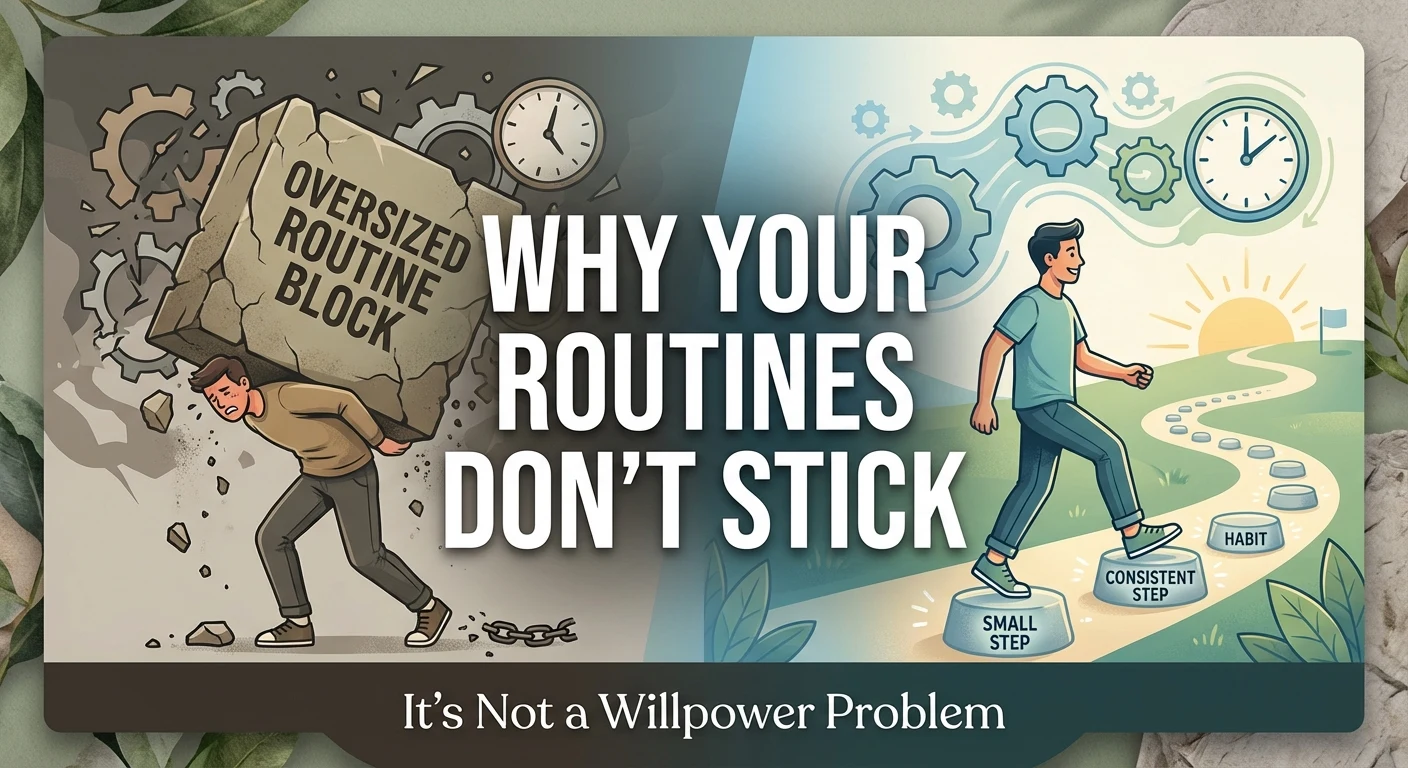
Trying to Create a Perfect Morning Routine Will Only Burn You Out Faster
Morning routines are frequently discussed for a good reason. Establishing practices like reading, meditation, or light exercise in the morning can shift the entire energy flow of your day. Numerous studies consistently confirm this benefit.
The problem arises when you try to build a "perfect morning routine" all at once. Waking up an hour early to cram in a flurry of self-improvement activities usually lasts less than three days. Simple actions like drinking a glass of water, stretching for 3 minutes, or opening the window to let in sunlight are far more realistic and sustainable.
The goal of a morning routine isn't to conquer the entire day at once. It's enough to simply get your first step right, without tripping.
Routines Form at the Pace Your Brain Adapts, Not Your Resolve
Habits are deeply connected to the brain's basal ganglia, and the more an action is repeated, the more automatically it's processed. The core of this process involves just three elements: the Cue → Routine → Reward loop.
For example, if sitting at your desk after work is the cue, studying for 10 minutes is the routine, and enjoying a favorite cup of tea afterward is the reward. Once this loop is established, "something you have to do" gradually transforms into "something you just do."
The success of a routine transition depends less on the magnitude of your resolve and more on how clearly you define the cue and how immediately you provide the reward.
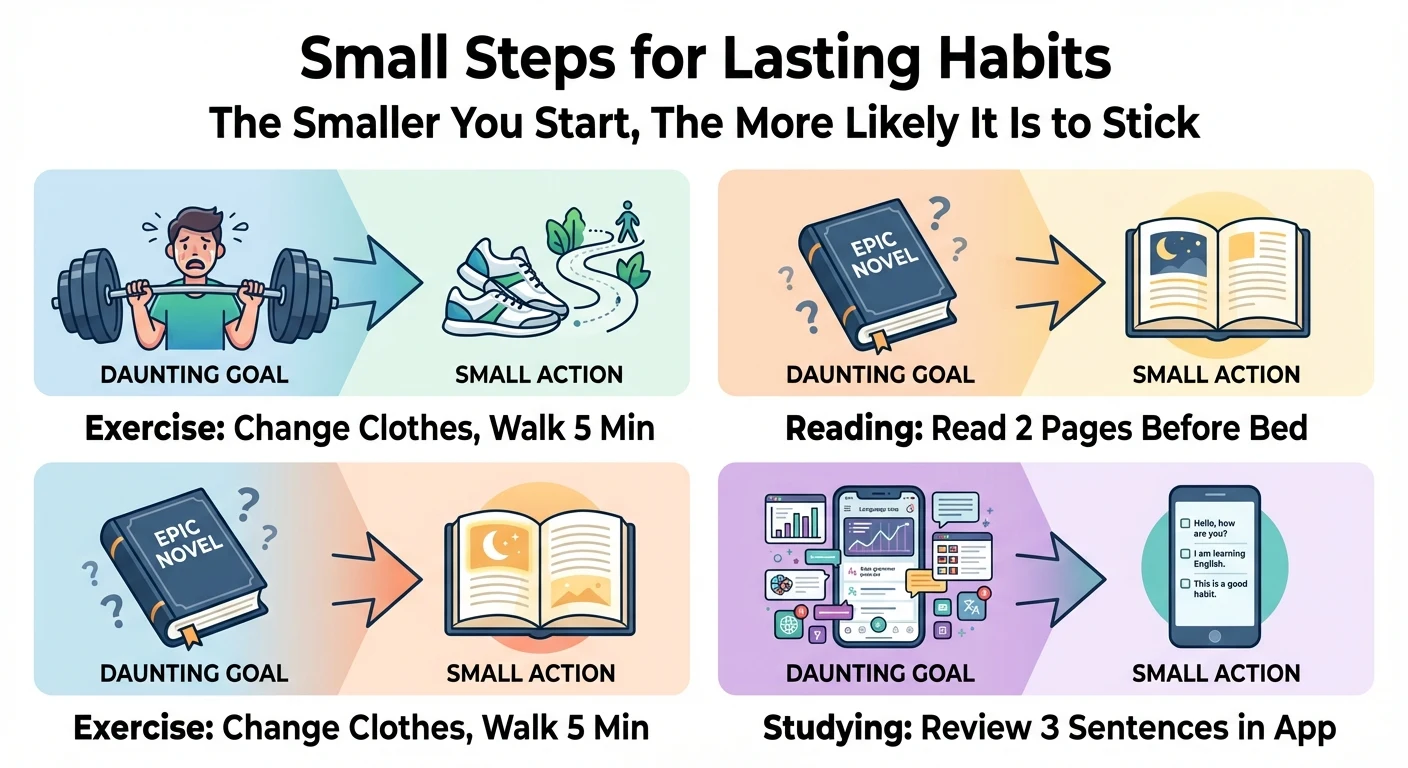
The Smaller You Start, The More Likely It Is to Stick
New habits might seem impressive when started big, but in reality, the smaller you start, the longer they last. Small successes build self-efficacy, which forms the foundation of consistency.
Here's what that looks like in practice:
- "Exercise for 1 hour daily" → Change into workout clothes and walk for 5 minutes
- "Read 30 pages" → Read 2 pages before bed
- "Study English for 1 hour" → Open the app and review 3 example sentences
It's perfectly fine if it feels too easy. In the early stages of a routine, what matters isn't the size of the achievement, but regaining the feeling that 'I am someone who can start again.'
Those Who Stick With It Change Their Environment First, Not Just Their Schedule
Your environment shapes your behavior. Placing your running shoes where you can see them increases the likelihood of exercising, and keeping your smartphone out of the bedroom means you'll check it less at night. To eliminate bad habits, it's far more effective to proactively create an environment where temptations don't arise in the first place, rather than relying solely on willpower.
Habit stacking is also practical. By linking a new habit to an action you already perform, the routine becomes anchored in your daily life instead of floating unconnected.
- "Stretch for 1 minute after brushing your teeth"
- "Write down 3 tasks for the day after brewing coffee"
For tasks requiring focus during the day, the Pomodoro Technique — 25 minutes of work followed by a 5-minute break — is more effective and less fatiguing than simply trying to endure for long periods. It's particularly well-suited for heavy-starting tasks like studying or writing reports.
As your to-do list grows, prioritization becomes crucial. Using the Eisenhower Matrix to categorize tasks by importance and urgency can help you avoid being constantly pulled by urgent matters, allowing you to allocate time for truly important work.
When Your Routine Breaks, What You Need Isn't Self-Reproach
Many people fail at routine changes not because they miss a day, but because they harshly criticize themselves afterward. When thoughts like 'I've failed again' accumulate, they tend to avoid the action entirely.
Self-compassion is a helpful attitude here. Instead of blaming yourself in moments of failure, it's about understanding and trying again. This isn't emotional coddling, but rather a practical strategy for continuing your actions.
The core idea is simple: Those who quickly return to their routine after a break last longer than those who try to maintain it perfectly. If you miss a day, just restart immediately the next morning. That's all there is to it.
Note: Not every routine strategy works identically for everyone. Different approaches may suit different lifestyles, energy levels, and personalities. Therefore, instead of blindly copying someone else's routine, it's better to adapt and scale it to fit your own day.
If You're Starting Today, These Three Steps Are All You Need
You don't need to change much from the start. Just decide on these three things today:
- One smallest action to repeat in the morning — e.g., Drink a glass of water upon waking
- One new action to attach to an existing habit — e.g., Stretch for 3 minutes after brushing your teeth
- One criterion for restarting when you miss a day — e.g., If you skip a day, restart immediately the next morning
Routines must inherently begin at such a realistic scale to be sustainable.
Transforming your daily routine isn't about overhauling your entire life. It's more about making a broken day less broken and helping a tired mind become its own ally again. Instead of a grand resolution, leave yourself one small repetition today. Lasting change begins there.