Ultimate Korean Street Food Guide
You step into a night market in Seoul, the air smells like chili sauce, toasted sugar, and fish cake broth, and suddenly every stall looks worth a stop. Then the practical questions hit: what should y
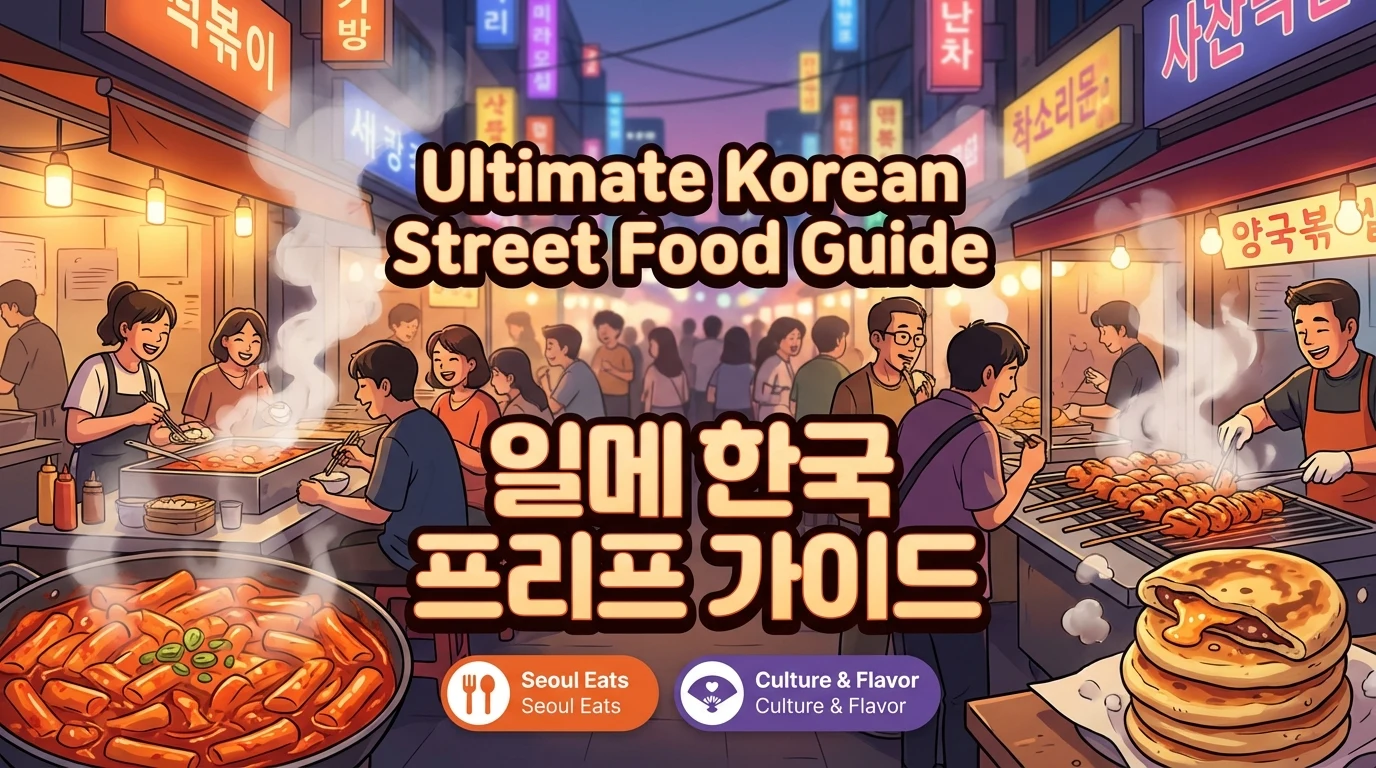
You step into a night market in Seoul, the air smells like chili sauce, toasted sugar, and fish cake broth, and suddenly every stall looks worth a stop. Then the practical questions hit: what should you eat first, what is actually local, and where can you find the best Korean street food without wasting a meal on a gimmick? A useful Korean street food guide should make that first hour feel exciting, not overwhelming.
That matters because Korean street food is more than cheap food on the go. It has long been treated as part of Korean popular culture and a recognizable piece of Korean food culture itself. Add the global pull of K-pop, K-dramas, and K-food, and it makes sense that street food in Korea has become one of the first things travelers want to try.
What makes it special is the range. You can eat something fiery, something sweet, something fried, something brothy, and something nostalgic within a few blocks. If you want a practical way into Korean food that feels local, affordable, and memorable, street food is still one of the best places to start. The next question, of course, is what deserves a spot on your first plate.
Why Korean Street Food Feels So Distinct
A lot of countries have great street snacks, but Korea's version stands out because it sits at the intersection of everyday life, market culture, and fast-changing urban neighborhoods. You are not just buying food. You are stepping into a rhythm: office workers grabbing a quick bite, students sharing skewers after class, market regulars returning to the same cart, and visitors realizing that the "snack" they ordered is nearly a full meal.
Another reason it stays so popular is accessibility. A proper sit-down Korean meal can be wonderful, but it often requires time, a table, and a bigger order. Street food lets you taste more in one outing. That is why it works so well for travelers and new residents who want a Korean food guide for tourists that feels doable on day one.
It is also one of the clearest ways to see how traditional tastes and pop-culture trends mix in Korea. Some foods have been market staples for decades. Others became globally recognizable through dramas, variety shows, or viral clips. That mix is part of the fun, and it helps explain why a humble snack can feel tied to a much bigger cultural story. Once you understand that, the must-try dishes make more sense.
Must-Try Korean Street Food
Tteokbokki: the dish most visitors start with
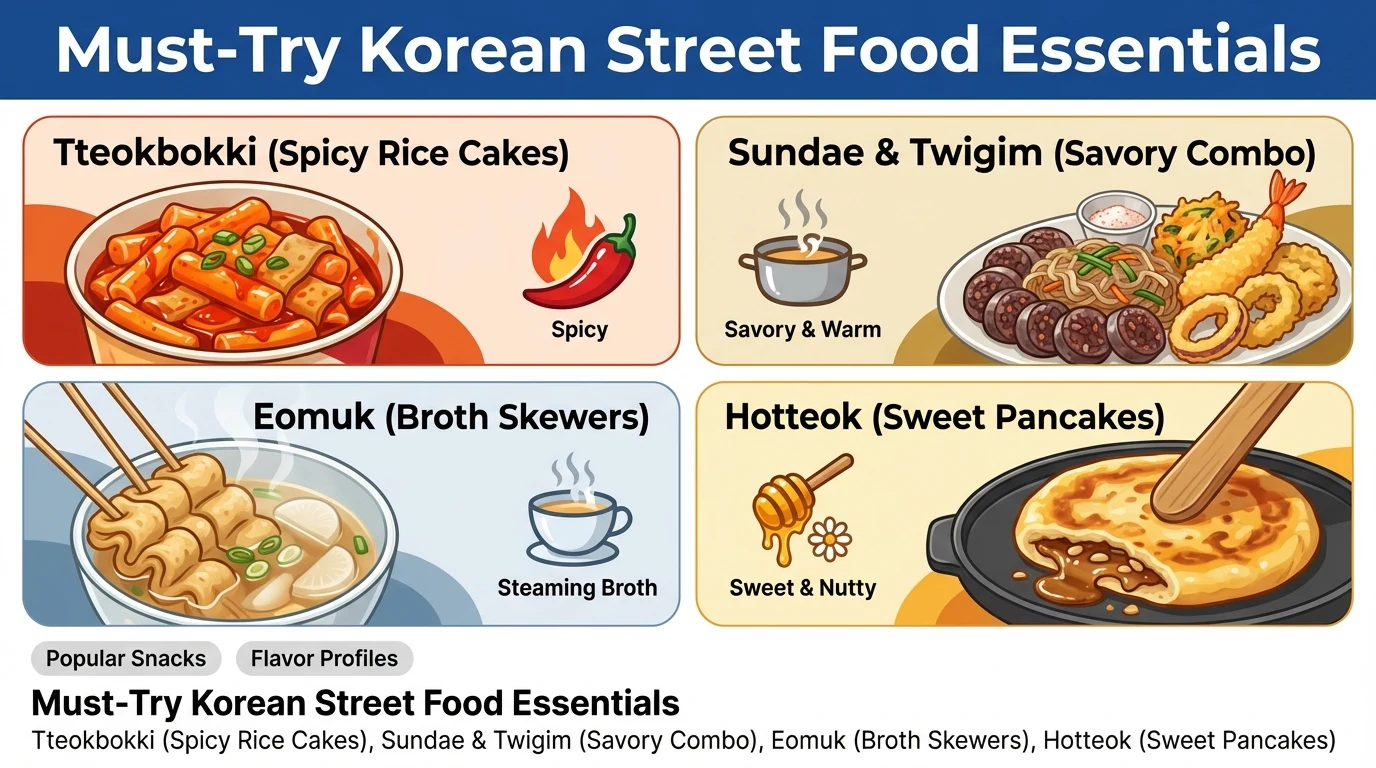
Tteokbokki (떡볶이, chewy rice cakes in a spicy-sweet red sauce) is the dish most people picture first, and for good reason. It is widely treated as the icon of Korean street food — even described among foreign visitors as a kind of "queen" of the genre.
If you are new to it, expect a sauce built around gochujang (고추장, Korean red chili paste), sweetness, heat, and a slow-building richness. Fish cake strips are often mixed in, and boiled eggs or dumplings may be added depending on the stall. The texture matters as much as the flavor: tteok should feel pleasantly chewy, not mushy.
If you do not handle spice well, do not skip it automatically. Ask for a small serving first, or pair it with something mild like eomuk broth. Tteokbokki is also one of the easiest dishes to use as a benchmark. When locals talk about a favorite stall, they often mean the sauce balance and rice cake texture are better than average. Once you have tried it, the rest of the street food world opens up quickly.
Sundae and twigim: the classic side-by-side order
Sundae (순대, Korean blood sausage typically filled with glass noodles and seasonings) can sound intimidating on paper, but it is one of the most popular Korean street food items for a reason. It is commonly served with salt, ssamjang (쌈장, savory dipping paste), or dipped directly into tteokbokki sauce — the last option being especially common at casual street stalls.
The flavor is milder than many first-timers expect. Texture is the bigger issue: soft casing, bouncy noodles, and a rich savory finish. If you are uncertain, order a mixed plate with only a few pieces rather than committing to a full portion.
Twigim (튀김, Korean-style fried snacks) often appears right next to tteokbokki and sundae. Think fried sweet potato, squid, mandu (만두, dumplings), or vegetables. A very common local move is to dip the fried pieces into the tteokbokki sauce. It is messy, satisfying, and one of the fastest ways to understand why these foods are often sold as a set. Once you have covered the spicy and fried corner of the menu, something warm and brothy starts to sound appealing.
Eomuk: simple, comforting, and easier than it looks
Eomuk (어묵, fish cake usually served on skewers in hot broth) is one of the smartest early orders for travelers. It is inexpensive, comforting, and usually less challenging than the bright-red dishes next to it. You pull a skewer from the pot, eat the fish cake, and sip the broth from a paper cup or small container if the stall offers it.
This is also one of the best foods for colder months. The broth can be light but deeply savory, and it cuts through the heavier fried items around it. If you are unsure what to eat first in winter, eomuk is often the answer.
It also teaches you something useful about Korean street food etiquette: many stalls have small self-service patterns. You may take your own cup, grab your own skewer, and pay after counting. Watch what the people ahead of you do. That habit of observing first will help with almost every other stall you visit.
Hotteok, bungeoppang, and gyeranppang: the winter favorites
Hotteok (호떡, a filled pancake usually packed with brown sugar, cinnamon, and seeds or nuts) is one of the great cold-weather snacks in Korea. The outside gets crisp from the griddle, while the inside turns molten and sticky. It is sweet, filling, and worth eating carefully because the syrup can be hot enough to burn your mouth.
Bungeoppang (붕어빵, fish-shaped pastry usually filled with red bean paste or custard) is another winter classic. Despite the fish shape, it is a sweet bread, not seafood. It likely developed from the Japanese taiyaki tradition before becoming fully familiar in Korea. In practice, what matters is choosing the filling you want and eating it while still warm.
Gyeranppang (계란빵, soft egg bread with a whole egg baked into the top) is the less flashy option, but many long-term residents end up loving it. It is slightly sweet, slightly savory, and very good when you need something quick before getting on the subway. Sweet snacks are a huge part of the appeal, but the smoky grilled side of Korean street food is just as important.
Dakkochi and Korean corn dogs: bold, easy crowd-pleasers
Dakkochi (닭꼬치, grilled chicken skewers) is one of the easiest recommendations in any Korean street food guide because it works for almost everyone. Small pieces of chicken and vegetables are grilled on skewers and finished with different sauces — sweet soy versions, spicy glazed versions, or stalls that go heavy on the pepper and char.
It is less messy than tteokbokki, more familiar than sundae, and easy to eat while walking. If you are with hesitant eaters, dakkochi is often the safe first order.
Korean corn dogs, sometimes called Korean hot dogs, are more modern-feeling but hugely visible in tourist-heavy areas. The batter can include potato cubes, mozzarella, or half sausage-half cheese fillings, then get dusted with sugar before ketchup and mustard are added. It is not the most traditional item in this guide, but it absolutely belongs in the current street food landscape. Once you have covered savory staples, a smaller, nostalgic treat makes a good final stop.
Dalgona and other nostalgic sweets
Dalgona (달고나, thin honeycomb candy made from melted sugar and baking soda) became globally recognizable after Squid Game, which boosted its international profile considerably. In Korea, though, it carries an older-school nostalgia that goes beyond streaming fame.
The appeal is not complexity. It is the brittle sweetness, the toasted sugar flavor, and the fun of seeing a snack that looks almost homemade. Some stalls also turn the purchase into a game by pressing shapes into the candy.
This is where street food in Korea often feels most human. Not every snack is about bold flavor or social-media spectacle. Some are about memory, season, and habit. Once you know what to eat, the next practical issue is where to actually find the best versions.
Where to Find Korean Street Food
Myeongdong for variety and easy first-timers
If this is your first serious Seoul street food outing, Myeongdong is the easiest starting point. It is busy, tourist-friendly, and packed with stalls in the evening. You may pay a little more than in neighborhood markets, but the upside is convenience and variety.
Myeongdong is especially good for seeing the broad menu in one walk: tteokbokki, grilled skewers, egg bread, hotteok, Korean corn dogs, and trendier snacks aimed at mixed local and international crowds. If you want an introduction without much guesswork, this is the right place.
The tradeoff is that Myeongdong can feel crowded and a bit performative. For some people that energy is part of the fun. For others, it becomes the place to start, not the place to end.
Gwangjang Market for heritage and deeper flavor
Gwangjang Market (광장시장) is one of the most important food stops in Seoul. It is one of Korea's oldest continuously operating markets, and its specialties include mayak gimbap (마약김밥, small addictive-style seaweed rice rolls), bindaetteok (빈대떡, mung bean pancakes), and yukhoe (육회, seasoned raw beef).
This is where the line between "street food" and "market food" gets pleasantly blurry. You are still eating casual, fast, affordable dishes, but with a stronger sense of history and stall identity. It is an excellent place to try a fuller range of textures and flavors, especially if you want more than skewers and sweets.
If you only have one market meal in Seoul and you want something that feels rooted rather than flashy, Gwangjang is a strong candidate. It also prepares you well for traditional markets in other cities.
Namdaemun and neighborhood markets for everyday eating
Namdaemun Market (남대문시장) works well if you want a more everyday market atmosphere and are willing to wander. It is a better fit for people who enjoy browsing rather than targeting one viral stall. You may not get the same social-media buzz as Myeongdong, but you often get a more practical look at how locals snack and shop.
Neighborhood markets can be even better. The challenge is that they are less predictable for visitors. Stalls may be seasonal, some popular carts are not there every day, and certain vendors disappear or move because street vending regulations and enforcement can vary by area. That does not mean avoid them. It means treat "must-visit stall" recommendations with flexibility.
A good rule is to look for high turnover, visible local customers, and stalls that specialize in one or two things. Once you know where to go, ordering well becomes the next skill.
Outside Seoul: use the same method, not the same checklist
There is great street food outside Seoul, especially in large markets and busy downtown areas. Rather than pretending every destination has a definitive set menu, use the same approach elsewhere: go to a traditional market, look for queues, focus on regional specialties, and start with the stalls locals repeat.
That method works better than chasing a generic "top 10" list in a city you have not visited before. It also keeps your expectations realistic, which matters when you are dealing with seasonal vendors and a changing street scene.
How to Order, Pay, and Eat Without Feeling Lost
The best Korean street food experiences are usually simple, but small details make them smoother.
First, watch before you order. Some stalls want you to order first. Others expect you to pick up the item yourself and pay after. A ten-second pause to observe saves confusion.
Second, carry some cash even if you expect to use a card. Many stalls now accept cards or local payment methods, but smaller vendors may still prefer cash or have inconsistent options. The safest advice is practical rather than absolute: do not assume every stall is cashless.
Third, ask basic questions clearly. Short phrases go a long way:
- "Is it spicy?"
- "One, please."
- "Can I have less sauce?"
- "What do you recommend?"
Fourth, do not block the stall after ordering. Eat to the side if space is tight. If there is a return bucket for skewers or cups, use it. If there is a standing counter, share the space and keep moving once you are done.
Finally, pace yourself. One mistake first-time visitors make is ordering a full serving at every stop. Street food works best when you split portions, share with friends, and leave room for the next thing. That becomes even more important once hygiene and comfort enter the conversation.
Hygiene, Comfort, and Street-Smart Judgment
Street food in Korea is generally easy to enjoy, but common sense matters. There are long-standing concerns around hygiene in some informal vending environments, but conditions have improved considerably over time. The right takeaway is not fear — it is judgment.
Choose stalls with visible turnover. Food that is being cooked constantly and sold quickly is usually a safer bet than something sitting around. Look for clean utensils, organized prep space, and vendors handling money and food in a sensible way. In markets, a busy stall with repeat customers is often the best signal you can get.
If you have a sensitive stomach, start with hot cooked items rather than raw or heavily sauced dishes. Eomuk, hotteok, grilled skewers, and freshly fried snacks are often easier opening choices than richer or more intense foods. If you are worried about spice, remember that "mild" is relative in Korea. Pair spicy orders with broth or a sweet snack rather than trying to power through.
It is also worth knowing that some beloved seasonal stalls, including bungeoppang carts, may be affected by local enforcement or street-vending restrictions. In practical terms, that means a stall recommended online may not be there when you arrive. Build your plans around neighborhoods and markets, not one exact cart, and you will have a much better time. With that mindset, you can put together a food crawl that actually works.
A Simple Seoul Street Food Plan
If you want one easy route for your first outing, keep it simple.
Start in Myeongdong if you want variety and low friction. Try tteokbokki first, then add dakkochi or a Korean corn dog, and finish with hotteok or dalgona if you still have room.
Choose Gwangjang Market if you want a more traditional feel. Begin with mayak gimbap or bindaetteok, add sundae or eomuk, and end with something sweet on the way out.
Pick one market and one sweet stop, not six heavy dishes in a row. That balance usually gives you a better memory of the night than trying to "complete" Korean street food in a single evening.
Final Thoughts
The reason Korean street food stays with people is not just flavor. It is the whole scene: steam rising from broth, sugar hardening on a hot griddle, the quick exchange at a stall, the mix of comfort and curiosity in every order. A strong Korean street food guide should help you eat well, but it should also help you notice that atmosphere.
If you are visiting Korea soon, start with the classics. Eat tteokbokki even if you are unsure. Try sundae if you want the full experience. Order dakkochi when you want something easy, and never skip the winter sweets if you see them fresh. The best meal is usually not the most famous one online. It is the one you eat hot, standing nearby, while the next stall already smells tempting.