Korean Jjimjilbang Guide — What First-Timers Actually Need to Know
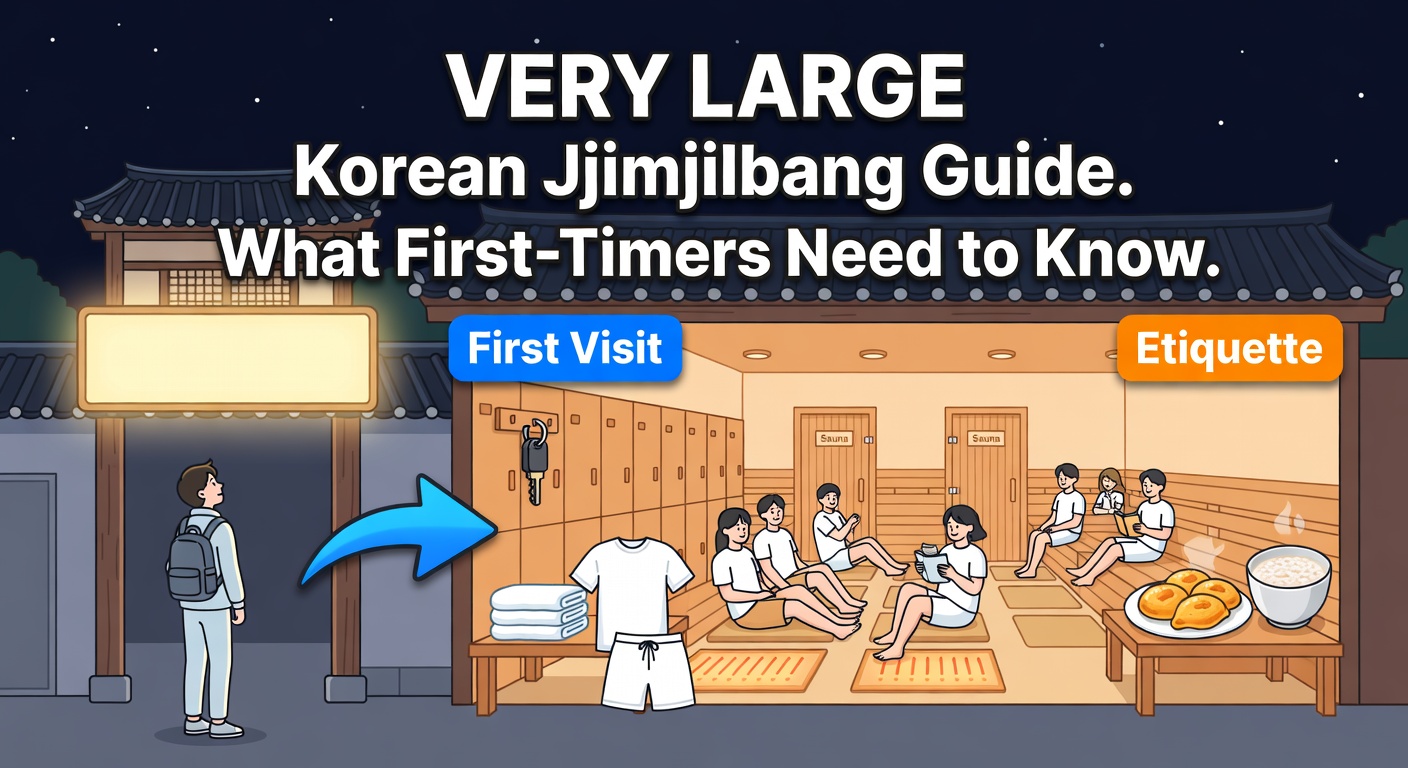
You're standing outside a building with a glowing sign you can barely read, wondering if you're about to walk into the most awkward situation of your trip. The idea of stripping down in a room full of strangers sounds intense, and you've read enough conflicting advice online to feel more confused than prepared. That uncertainty is exactly why most first-time visitors hesitate at the door — and why a surprising number never make it inside at all.
This article walks you through what actually happens inside a jjimjilbang (찜질방), step by step — from paying at the front desk to figuring out the locker system, navigating the bathing areas, and knowing which sauna rooms to try first. By the end, you'll know what to bring, what the etiquette rules really are, and how much the whole experience costs.
What a Jjimjilbang Actually Is (and Isn't)
A jjimjilbang is a large, multi-floor public bathhouse that combines hot and cold soaking pools, dry and wet saunas, scrub services, lounging areas, and usually a cafeteria — all under one roof. Most operate 24 hours. The word literally translates to "heated room," but calling it just a sauna undersells what's going on inside.
Think of it as part bathhouse, part community center, part budget hotel. Koreans use jjimjilbangs for everything from post-work relaxation to weekend family outings to cheap overnight stays when they've missed the last subway. Friends camp out in the common areas watching TV, couples share baked eggs on heated floors, and solo visitors nap in quiet corners. It's deeply woven into daily Korean life in a way that doesn't really have a Western equivalent.
Many people find the concept confusing because they conflate jjimjilbangs with smaller neighborhood bathhouses called mogyoktang (목욕탕). A mogyoktang is a simple, no-frills public bath — showers, a couple of hot tubs, maybe a basic sauna. A jjimjilbang takes that foundation and adds themed sauna rooms, rest areas, entertainment, food courts, and co-ed common spaces. If you're looking for the full cultural experience, a jjimjilbang is what you want.
So what does a visit actually look like from the moment you walk in?
Step by Step: Your First Visit From Door to Door
The flow inside a jjimjilbang follows a consistent pattern across most facilities. Once you understand the sequence, you won't feel lost — even if you can't read a word of Korean.
At the front desk, you pay the entry fee and receive a numbered wristband or ankle key. This key opens your locker and also works as a charge card — anything you buy inside (food, drinks, scrub service) gets logged to your key number and settled when you leave. Most places accept credit cards and mobile payments now, though a few smaller bathhouses are still cash-only.
In the locker room, you'll find your numbered locker with a set of shorts and a t-shirt inside. These provided clothes are for the co-ed common areas only. In the bathing section — where the pools, showers, and wet saunas are — everyone is nude. This is where first-timers get tripped up, so let's talk about that directly.
The bathing area is gender-separated. You will not be in a mixed-gender nude space at any point. Before entering the pools, you sit at a shower station and wash thoroughly — soap, shampoo, the works. Koreans consider it extremely rude to enter the soaking pools without washing first. Once clean, you can move between hot tubs at different temperatures, cold plunge pools, and sometimes a small sauna within the bathing section.
After bathing, you dry off, put on the provided clothing, and head to the co-ed common floor. This is the jjimjilbang proper — themed dry sauna rooms (salt rooms, clay rooms, charcoal rooms, ice rooms), a large open floor with mats and pillows, TV screens, a snack bar or restaurant, and sometimes arcades or PC rooms. You can stay here for hours.
When you're ready to leave, return to the locker room, change back into your own clothes, and hand in the key at the front desk. They'll tally any extras and you pay the balance.
What to Bring (and What You Don't Need)
One common source of confusion, based on traveler reviews, is overthinking the packing list. Jjimjilbangs provide almost everything. Here's what you actually need versus what's already waiting for you.
The facility provides towels (usually one small and one large), the shorts-and-shirt uniform, basic soap and shampoo at the shower stations, and a locker for your belongings. Some places offer toothbrushes and razors at the front desk for a small fee. You do not need to bring your own towel, flip-flops (provided at most facilities), or padlock.
Where people commonly get confused is with valuables. Your locker key is the only thing you carry around inside. Leave your phone, wallet, and everything else locked up. The key wristband is waterproof — wear it into the pools, into the saunas, everywhere.
Now that you know what to bring, let's cover the part that actually makes people nervous.
The Nudity Question — Honest Answers
This is the single biggest hesitation for foreign visitors, and understandably so. Here's the reality: the bathing area requires nudity, and there is no way around it. You cannot wear a swimsuit in the pools or showers. Small modesty towels are available, and many people carry one to loosely cover themselves while walking between pools, but in the water, you're bare.
What helps to know is that absolutely nobody is looking at you. The atmosphere in a Korean bathhouse is remarkably casual about bodies. People of all ages and body types are going about their routine — scrubbing, soaking, chatting with friends — with zero self-consciousness. Staring is considered far ruder than being naked. Within ten minutes, most first-timers report that the awkwardness fades almost completely.
If the nude bathing areas feel like too much on your first visit, you can skip them entirely and head straight to the co-ed common floor in the provided clothing. You'll still get to experience the dry saunas, the food, and the lounging culture. It's a perfectly valid way to enjoy a jjimjilbang without the full immersion.
One area where reviews show consistent confusion: tattoos. Some jjimjilbangs restrict entry for guests with visible tattoos, though enforcement has relaxed significantly in recent years, especially at tourist-friendly facilities in Seoul. If you have large or prominent tattoos, it's worth calling ahead or checking recent online reviews for the specific location you plan to visit.
Etiquette That Actually Matters
You don't need to memorize a long list of rules. Most jjimjilbang etiquette comes down to basic consideration for shared space. But a few points genuinely trip people up.
Shower before the pools — always. This is non-negotiable. Sit down at a shower station, scrub properly with soap, and rinse completely before touching any communal water. Koreans take this very seriously, and skipping it is the fastest way to draw disapproving looks.
Keep your voice down in the sauna rooms. The common floor can be lively, but inside the individual sauna chambers, people are resting or meditating. Loud conversations and phone calls are frowned upon in these spaces.
Don't take photos. This should go without saying in a place where people are undressed, but it extends to the clothed areas too. Many jjimjilbangs explicitly prohibit phone use in the bathing zones.
Wring out your small towel before entering saunas. Bringing a dripping wet towel into a dry sauna room is a common rookie mistake that locals notice immediately.
Clean up after yourself in the common area. If you eat on the heated floor, clear your trash. If you used a mat and pillow, fold them or return them to the stack.
| Do | Don't |
|---|---|
| Shower thoroughly before entering pools | Jump into pools without washing |
| Use a small towel for modesty while walking | Wear a swimsuit in the bathing area |
| Keep quiet in sauna rooms | Make phone calls or play videos on speaker |
| Lock valuables in your locker | Carry your phone into wet zones |
| Dry off before returning to the clothed area | Walk through common areas dripping wet |
| Drink water between sauna sessions | Bring alcohol into the facility |
Understanding the etiquette helps, but you'll also want to know what the experience will cost.
How Much It Costs and How Long to Stay
Jjimjilbang pricing is straightforward and surprisingly affordable. Entry fees at standard facilities typically run between 10,000 and 15,000 KRW (roughly $7–11 USD), which covers the locker, uniform, towels, and access to all bathing and sauna areas. Some charge slightly more on weekends or during late-night hours.
The base fee usually covers 4 to 6 hours of access, with overtime charges that vary by facility — typically a few thousand KRW per hour or per time block, so check the posted rate when you arrive. Upscale spa-type jjimjilbangs or resort facilities may charge 20,000–50,000 KRW and include longer or unlimited stays.
Optional extras add up if you want them. A full-body scrub (때밀이, ttaemiri) from a professional scrubber typically costs 20,000–40,000 KRW and is worth trying at least once — it's one of the most distinctly Korean parts of the experience. Food inside ranges from 5,000–10,000 KRW for staples like baked eggs (맥반석 계란), sikhye (식혜, sweet rice drink), and ramyeon.
Overnight pricing is another point that trips people up. Many jjimjilbangs allow overnight stays at the standard entry fee or with a small surcharge. You sleep on the heated common floor or in reclining chairs — it's not luxury, but it's warm, safe, and extremely cheap compared to a hotel. Budget travelers have used jjimjilbangs as hostel alternatives for years.
Jjimjilbang vs. Mogyoktang vs. Luxury Spa — Which Is Right for You?
Not all Korean bathing experiences are the same. Picking the right type of facility depends on what you're after.
A mogyoktang is the neighborhood-level public bath found on nearly every other block in Korean cities. There are no themed saunas, no common lounging areas, and no food courts. You go in, wash, soak, and leave. It's a completely functional experience and a great option if you just want a hot bath without the spectacle.
Jjimjilbangs are the sweet spot for visitors — affordable, culturally rich, and spacious enough to spend half a day in. The large facilities in Seoul (like Dragon Hill Spa in Yongsan or Siloam Sauna near Seoul Station) are particularly foreigner-friendly, with some English signage and staff accustomed to non-Korean guests.
Luxury spas and resort-style facilities offer private treatment rooms, high-end products, and a quieter atmosphere — but you're paying a premium and missing the communal aspect that makes jjimjilbangs culturally interesting.
Health Notes and Practical Cautions
Jjimjilbangs are generally safe and hygienic, but a few health-related points are worth knowing.
Stay hydrated. Moving between hot saunas and cold pools is dehydrating. Drink water or sikhye between sessions. Most facilities have water coolers on every floor.
Limit your time in each sauna room. Ten to twenty minutes per room is the general guideline. If you feel dizzy or lightheaded, step out immediately and cool down. First-timers sometimes push through discomfort to "get the full experience," which is exactly the wrong approach.
Don't visit after drinking alcohol. Many facilities won't admit visibly intoxicated guests, and combining alcohol with extreme heat is a genuine health risk.
Remove contact lenses before entering steam rooms — the heat and humidity can warp soft lenses and cause irritation.
Making It a Great First Experience
Your first jjimjilbang visit doesn't need to be perfect. Go with a friend if the nudity aspect feels daunting — having someone to laugh through the awkward moments with makes a real difference. Visit during a weekday afternoon when facilities are less crowded and you'll have more space to figure things out without feeling rushed.
Start with the bathing area to get clean, soak for a while, then move to the common floor and try two or three sauna rooms. Grab some baked eggs and a cold sikhye. Lie down on the heated floor. That's a solid first visit — no need to try everything in one go.
The overwhelming feedback from travelers who've gone through the initial hesitation is the same: they wish they'd done it sooner. A jjimjilbang visit is one of those Korea experiences that reading about can never quite replicate. The warmth, the quiet communal atmosphere, the strange satisfaction of being scrubbed clean by a stranger — it's something you carry with you.
Frequently Asked Questions
Q. Can I wear a swimsuit in a Korean jjimjilbang?
No. The bathing areas (pools, showers, wet saunas) require full nudity, and swimsuits are not permitted. These sections are strictly gender-separated, so you'll only be around people of the same gender. The co-ed common areas use the provided clothing uniform.
Q. How much does a jjimjilbang cost in Seoul?
Standard jjimjilbangs in Seoul charge around 10,000–15,000 KRW for entry, which includes locker access, towels, and a clothing set. Add-ons like a professional body scrub run 20,000–40,000 KRW extra. Food and drinks inside are typically 5,000–10,000 KRW per item.
Q. Can I sleep overnight at a jjimjilbang?
Most jjimjilbangs operate 24 hours and allow overnight stays, either at the standard entry fee or with a small surcharge. You sleep on the heated common floor or in reclining chairs — it's basic but warm and safe. Some facilities have separate sleeping rooms with mats.
Q. Are tattoos allowed in Korean jjimjilbangs?
Policies vary by facility. Some traditional bathhouses still restrict entry for guests with visible tattoos, though enforcement has become much more relaxed, especially at larger, tourist-friendly jjimjilbangs in Seoul. If you have prominent tattoos, check recent reviews or call the facility beforehand.
Q. What is the Korean body scrub and is it worth trying?
The ttaemiri (때밀이) is a full-body exfoliation performed by a professional scrubber using a rough mitt. It removes dead skin, improves circulation, and leaves your skin noticeably smoother. It costs 20,000–40,000 KRW at most jjimjilbangs and is widely considered one of the most memorable parts of the experience for first-time visitors.
Recommended Posts

Korea Travel Guide Creator
Practical Korea travel, food, and culture guides for foreign visitors.
View all posts →