Traditional Korean Restaurants in Seoul: A Practical Guide
You have a few days in Seoul and you want at least one proper Korean meal — not a random bibimbap from the first place you spot near your hotel, but a real sit-down experience with dishes that have been refined over generations. The problem is that "traditional Korean restaurant" can mean wildly different things depending on who you ask, and the price gap between a bowl of gomtang at a decades-old shop and a multi-course hanjeongsik dinner can be tenfold.
This guide breaks down the main types of traditional Korean dining you can actually book in Seoul, what each one costs, how to reserve a table, and what to watch out for so you don't end up confused by the menu or blindsided by the bill. Everything here draws on selections from the MICHELIN Guide Seoul and the Seoul Metropolitan Government's official 100 Taste of Seoul list.
What Counts as "Traditional Korean" in Seoul
Before you start searching, it helps to know that Seoul's traditional restaurant scene falls into a few distinct lanes. Many people assume "traditional Korean food" means one thing — a table covered in dozens of small dishes inside a hanok. That image is only one version of the experience, and it is often the most expensive one.
In practice, the term covers hanjeongsik (한정식, full-course Korean meals), single-dish heritage restaurants (gomtang, galbi, naengmyeon shops that have been open for decades), and modern Korean fine dining that reinterprets classic recipes with contemporary techniques. The MICHELIN Guide Seoul & Busan 2024 selection includes 177 restaurants across Seoul, and a significant share of those fall under Korean cuisine — but they range from Bib Gourmand noodle shops to multi-star tasting menus.
🔗 100 Taste of Seoul — Official List
The confusion point that trips up most visitors is mixing up contemporary Korean fine dining with traditional Korean dining. A Michelin-starred Korean restaurant in Cheongdam-dong might serve reinterpreted hansik on modern ceramics in a minimalist space — beautiful and delicious, but not quite the "wooden table in a hanok" experience some travelers are picturing. If that distinction matters to you, clarify it before you book.
So which type actually fits your trip? That depends on your budget, your group size, and whether you want an immersive cultural setting or just genuinely excellent food with deep roots.
The Four Types of Traditional Korean Dining, Compared
Here is a practical breakdown to help you decide which category to prioritize.
| Type | Price Range (per person) | What You Get | Best For |
|---|---|---|---|
| Hanjeongsik (full-course) | ₩70,000–₩200,000+ | Multi-course meal with 10–20+ dishes, seasonal ingredients, classic presentation | Special occasions, family dinners, cultural immersion |
| Heritage single-dish shops (노포) | ₩30,000–₩50,000 | One signature dish perfected over decades — gomtang, galbi, ganjang gejang | Solo diners, quick authentic meals, eating like a local |
| Modern Korean fine dining | ₩150,000+ | Korean ingredients and techniques reimagined in tasting-menu format | Anniversaries, business dinners, food enthusiasts |
| Casual specialty restaurants | ₩30,000–₩50,000 | Traditional dishes in a modern casual setting — ganjang gejang, bossam, jangeo (eel) | Friends, casual dates, Instagram-worthy meals with real flavor |
A common mistake is booking a hanjeongsik restaurant expecting the same price as a gomtang shop. Hanjeongsik at a well-regarded restaurant can easily run ₩100,000 or more per person for dinner. If your budget is closer to ₩30,000–₩50,000 per head, the heritage single-dish shops or Bib Gourmand picks will give you outstanding traditional flavors without the sticker shock.
Hanjeongsik: The Full Korean Course Experience
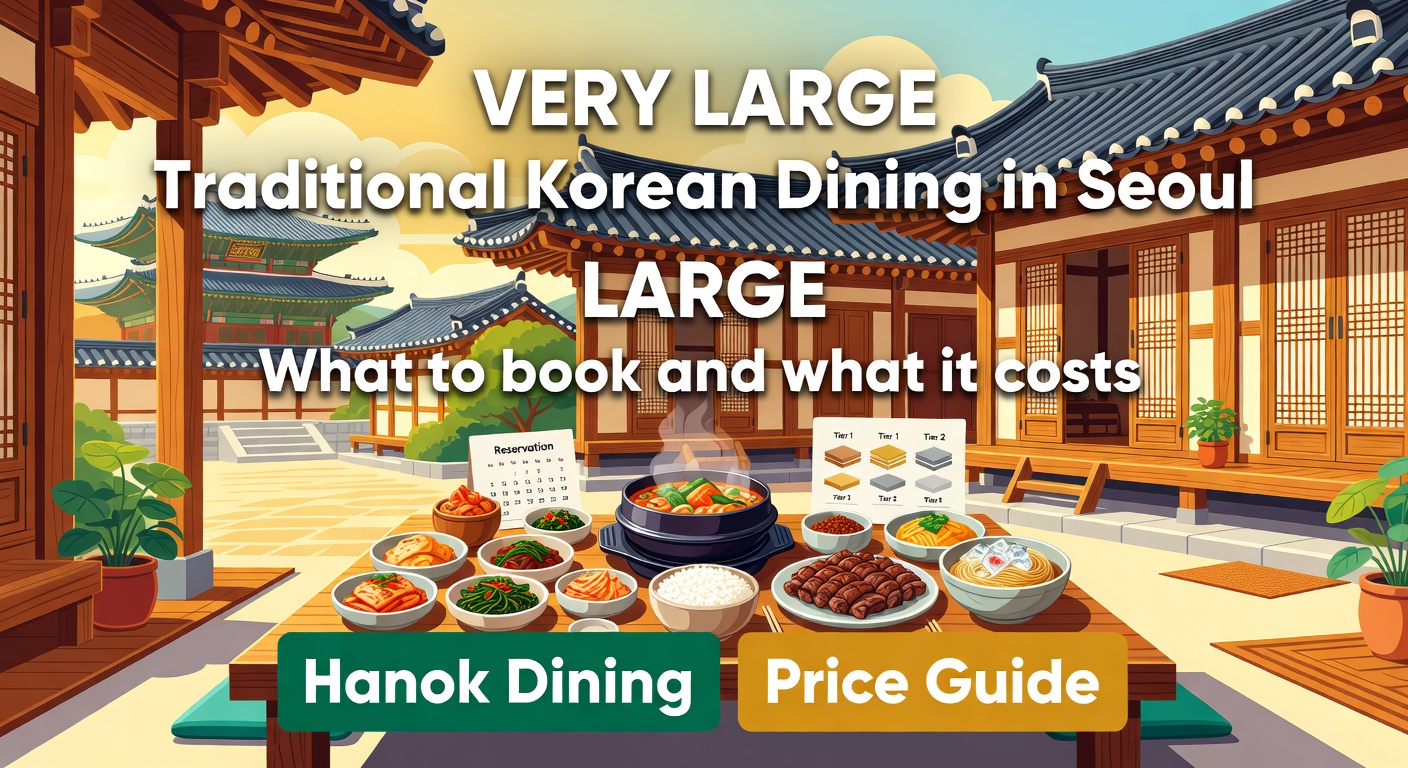
Hanjeongsik is the format most people imagine when they think of traditional Korean dining — a parade of dishes arriving in waves, covering grilled items, stews, seasonal vegetables, fermented banchan (side dishes), and rice. You don't pick individual items off a menu. Instead, you choose a course tier (usually based on price), and the kitchen builds the meal around what is seasonal and available that day.
The best hanjeongsik restaurants in Seoul cluster around a few neighborhoods. Jongno and Bukchon are home to several hanok-style restaurants where the setting itself is part of the experience — low wooden tables, traditional architecture, garden views. Gangnam and Cheongdam lean toward more polished, upscale presentations of the same cuisine, often in modern interiors.
What people commonly get wrong about hanjeongsik is expecting full menu customization. The course is set by the chef, and while most restaurants will accommodate allergies or religious dietary restrictions if you notify them in advance, you can't swap out half the dishes. If you have strong aversions to raw fish, very spicy food, or fermented flavors, satisfaction can drop — so check the restaurant's typical course photos before booking.
Another thing reviews consistently mention: hanjeongsik is slow by design. Plan for at least 90 minutes, and some Michelin-level spots limit seating to roughly two hours per table. This is not a quick lunch option.
If the cultural setting matters as much as the food, look specifically for restaurants in Bukchon, Ikseon-dong, or Seochon that operate inside renovated hanok buildings. The combination of traditional architecture and a full-course meal is the closest you can get to a historical Korean dining experience in central Seoul.
Heritage Restaurants and Bib Gourmand Picks
Not every great traditional Korean meal requires a full course. Seoul has a deep bench of nopo (노포) — restaurants that have served a single specialty for decades, sometimes generations. These places are where locals go for comfort food, and many have earned recognition from the MICHELIN Guide's Bib Gourmand list, which highlights restaurants offering excellent food at moderate prices.
Gebangsikdang, a ganjang gejang (soy-marinated raw crab) specialist, has reportedly been on the Bib Gourmand list consistently since 2018 — confirm against the current MICHELIN Guide listing before you visit. A ganjang gejang set there runs around ₩36,000 per person — a fraction of what you would pay at a fine dining restaurant, for a dish that is intensely traditional and deeply flavored.
🔗 TiffyCooks — Seoul Restaurant Picks
The most common frustration reviewers mention about these heritage spots is the wait. Famous nopos often don't take reservations. Even on a weekday at lunch, waits of 30 minutes or more are normal. On weekends, expect an hour or longer at the most popular places. The practical move is to arrive right when they open — usually 11:00 or 11:30 for lunch service.
For the ₩30,000–₩50,000 budget range, these are some of the traditional dishes worth seeking out at dedicated specialty restaurants:
Gomtang and seolleongtang — slow-simmered beef bone broths that are mild, deeply savory, and perfect for colder months. Galbitang — short rib soup that is richer and slightly sweet. Naengmyeon — buckwheat cold noodles, especially satisfying in summer. Ganjang gejang — raw crab marinated in soy sauce, sometimes called "rice thief" because you will eat far more rice than planned.
One note of caution: ganjang gejang and yukhoe (Korean beef tartare) are raw dishes. General food safety guidelines suggest that pregnant women, young children, and immunocompromised individuals should avoid them. This is standard advice, not specific to any restaurant.
Dining in a Hanok: Where Food Meets Architecture
If the setting is a priority — and for many first-time visitors it is — Seoul has a growing number of restaurants housed in hanok (한옥, traditional Korean wooden houses). These are concentrated in the Bukchon and Ikseon-dong neighborhoods, within walking distance of Gyeongbokgung Palace and Insadong.
Eating in a hanok typically means removing your shoes at the entrance, sitting on floor cushions at a low table, and dining in a space built with wooden beams, paper-screen doors, and small courtyard gardens. The food at hanok restaurants ranges from hanjeongsik to more focused menus — some serve only traditional teas and desserts, while others offer full dinner courses.
What surprises many visitors is that hanok dining can be physically uncomfortable if you are not used to sitting cross-legged on the floor for an extended period. Some restaurants now offer raised seating or chairs to accommodate this, but not all do. If this is a concern, check before booking.
The Bukchon and Ikseon-dong hanok restaurants are well-suited to a daytime sightseeing itinerary: spend the morning walking the palace grounds and hanok village, then have lunch at a nearby hanok restaurant. This keeps your travel time short and makes the meal feel like a natural extension of the cultural experience rather than a separate event.
🔗 MICHELIN Guide — Presenting Hansik to the World
How to Book and What to Expect
Reservations are essential for hanjeongsik restaurants and Michelin-starred Korean restaurants. Industry consensus and media reports consistently suggest booking at least two weeks ahead for weekday dinners, and three to four weeks ahead for weekend dinners at popular spots. Some fine dining restaurants require a deposit and charge cancellation fees if you no-show or cancel late — typically within one to three days of your reservation.
Booking channels vary. Some restaurants use their own website, others accept reservations through Naver Booking (the dominant local platform), and a few still only take phone reservations. If you don't speak Korean, Naver Booking has limited English support, but many higher-end restaurants have English-speaking staff who can handle phone or email reservations.
Dress code is generally relaxed at heritage restaurants and casual spots — clean, neat clothing is fine. At Michelin-starred restaurants and upscale hanjeongsik places, smart casual is a safe bet. Check the restaurant's website if you are unsure.
Payment is easy at most restaurants — credit cards and mobile payments (Samsung Pay, Apple Pay at some locations) are widely accepted. A few very old-school nopos near traditional markets may prefer cash, so carrying ₩50,000 or so in small bills is a practical backup.
Age restrictions do exist at some fine dining establishments. A small number of restaurants restrict entry to guests aged 12 or older. This is not common at heritage restaurants or casual spots, but worth confirming if you are traveling with young children.
Planning Your Meals Around Seoul's Neighborhoods
Seoul's traditional restaurants are not clustered in one area, so planning by neighborhood saves time and avoids backtracking.
Jongno / Bukchon / Ikseon-dong — The cultural heart of Seoul. Best for hanok restaurants, hanjeongsik, and traditional tea houses. Pair with visits to Gyeongbokgung, Changdeokgung, or the National Folk Museum. Most restaurants here are reachable on foot from Anguk Station (Line 3).
Myeongdong / Jung-gu — More tourist-oriented, but home to several long-running gomtang and galbitang restaurants. Convenient if your hotel is in the central area.
Gangnam / Cheongdam — Seoul's upscale dining district. This is where you will find most Michelin-starred Korean restaurants and high-end hanjeongsik. Combine with shopping at COEX or Garosu-gil. Nearest stations: Cheongdam (Line 7) or Apgujeong Rodeo (Bundang Line).
Euljiro / Seongsu — Emerging dining neighborhoods with a mix of old and new. Some heritage restaurants sit alongside contemporary Korean spots. Good for adventurous eaters who want to explore beyond the tourist-heavy areas.
For most trips, a practical strategy is to pick one lunch spot and one dinner spot per day, each in or near the neighborhood you are already visiting. Seoul's subway system makes cross-city restaurant trips possible, but factoring in transit time, a 30-minute radius from your accommodation or sightseeing base keeps things stress-free.
Seasonality matters more than you might expect. Spring and autumn bring the Taste of Seoul food festival weeks, when competition for reservations at featured restaurants intensifies. Summer is naengmyeon and jangeo (eel) season — expect longer waits at specialty shops. Winter favors hot soups and stews, and indoor dining fits naturally into a cold-weather itinerary.
Your Next Steps
Start with the two most reliable public lists: the MICHELIN Guide Seoul's Korean cuisine filter and the Seoul Metropolitan Government's 100 Taste of Seoul. Between them, you get a cross-section of fine dining, hanjeongsik, and heritage restaurants that have been vetted by inspectors or city officials — a far more dependable starting point than random blog recommendations.
Pick your budget tier first. For ₩30,000–₩50,000 per person, focus on Bib Gourmand picks and heritage single-dish restaurants. For ₩70,000–₩150,000, look at mid-range hanjeongsik. Above ₩150,000, you are in fine dining territory.
Then match restaurants to your daily itinerary by neighborhood, and book popular spots at least two weeks out. Confirm prices on the restaurant's official page before you go — not from old blog posts. That single habit will spare you more unpleasant surprises than any other tip in this guide.
Frequently Asked Questions
Q. How much does a traditional Korean restaurant in Seoul cost?
Heritage single-dish restaurants (gomtang, ganjang gejang) typically run ₩30,000–₩50,000 per person. Hanjeongsik full-course meals range from ₩70,000 to over ₩200,000 per person at dinner, depending on the restaurant's tier. Prices have risen across the board in recent years, so always check current pricing before you visit.
Q. Do I need a reservation for hanjeongsik restaurants in Seoul?
Yes, for most hanjeongsik and Michelin-listed Korean restaurants, reservations are essential. Weekend dinners at popular spots should be booked three to four weeks in advance. Some restaurants charge cancellation fees for late cancellations or no-shows, so confirm the policy when you book.
Q. What is the difference between hanjeongsik and Korean fine dining?
Hanjeongsik is a traditional multi-course format with classic dishes — banchan, grilled items, stews, and rice — served in a set sequence. Korean fine dining often reinterprets these traditions with modern techniques, plating, and ingredients in a tasting-menu format. Both draw from Korean culinary heritage, but the atmosphere, presentation, and price point can be very different.
Q. Where are the best traditional Korean restaurants located in Seoul?
Traditional Korean restaurants are spread across several neighborhoods. Jongno, Bukchon, and Ikseon-dong are strongest for hanok-style hanjeongsik. Gangnam and Cheongdam have the highest concentration of Michelin-starred Korean restaurants. Heritage single-dish shops are scattered throughout Jung-gu, Jongno, and older commercial districts.
Q. Can foreigners order easily at traditional Korean restaurants in Seoul?
At higher-end hanjeongsik and Michelin-listed restaurants, English menus and English-speaking staff are common. At heritage nopos and casual specialty shops, English support is less consistent — but ordering is often simple because the menu focuses on one or two dishes. Having a translation app or the restaurant name written in Korean on your phone helps significantly at smaller spots.

Korea Travel Guide Creator
Practical Korea travel, food, and culture guides for foreign visitors.
View all posts →