What Not to Do in Korea — 10 Etiquette Mistakes to Avoid
You are about to board a flight to Seoul, and somewhere between packing and excitement, a thought creeps in: what if you accidentally do something offensive without realizing it? Korea is incredibly welcoming to visitors, but its social customs run on a different operating system than most Western countries — and the things that trip people up are rarely the ones you would guess.
This article covers the 10 most common etiquette mistakes foreigners make in Korea, drawn from official Seoul tourism guidelines and well-documented traveler experiences. For each one, you will get the reason behind the rule and a simple fix so you can move through Korea with confidence instead of anxiety.
Shoes Off — No Exceptions
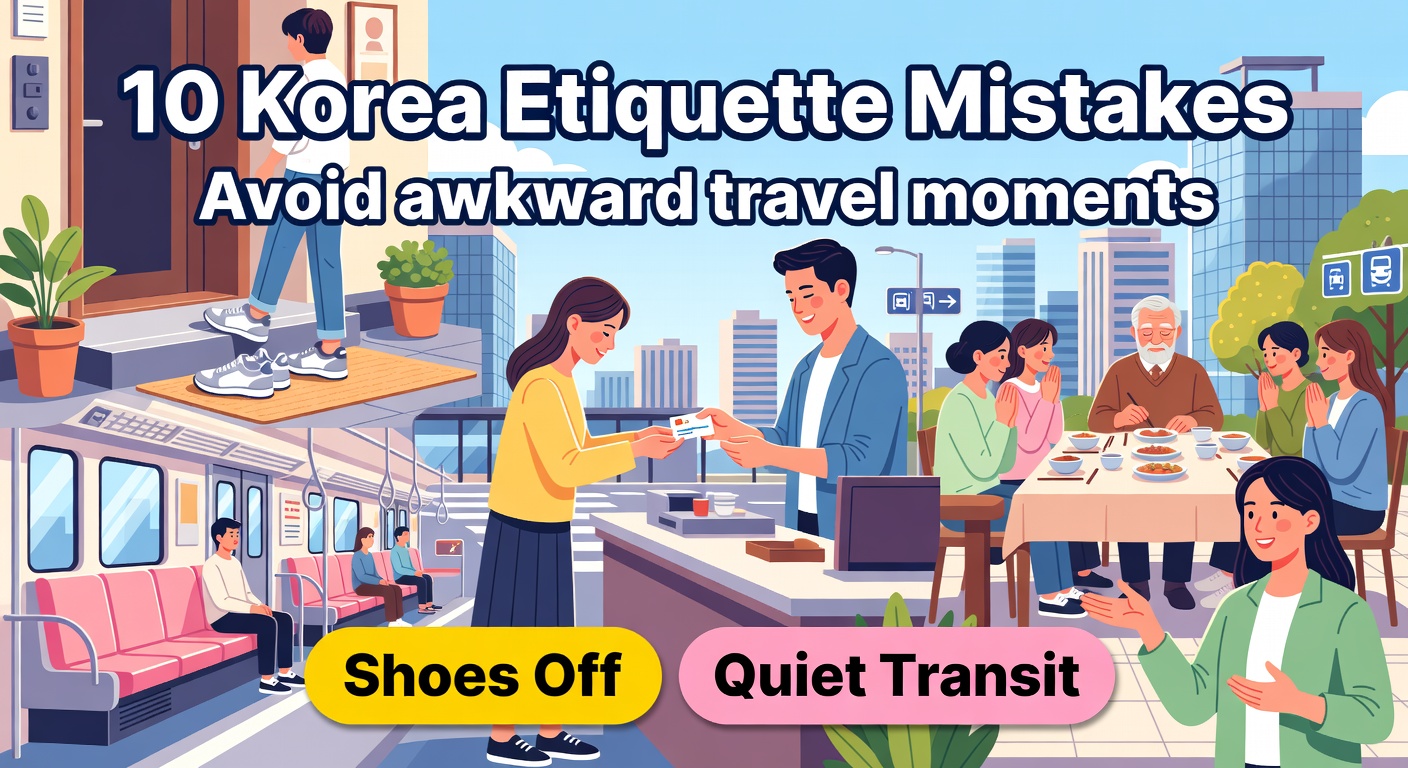
The single fastest way to make a Korean host uncomfortable is to walk into their home with your shoes on. This applies to traditional restaurants with floor seating (ondol style), temples, and many guesthouses too. The reason is practical as much as cultural: Korean homes use underfloor heating called ondol (온돌), and people sit, eat, and sleep on the floor. Outdoor shoes on that surface is the equivalent of someone climbing onto your bed with muddy boots.
Look for a small step-up or a pile of shoes near the entrance — that is your cue. Many people find the temple version confusing because some temple buildings require shoe removal while outdoor walkways do not. When in doubt, watch what the person ahead of you does. If you see shoes lined up outside a door, yours go there too.
This rule extends to fitting rooms in some traditional clothing shops and certain medical clinics. It is not limited to homes.
One Hand Is Not Enough
Handing someone your credit card, receiving change, passing a business card, or pouring a drink — in Korea, using both hands signals respect. At minimum, use your right hand while lightly touching your right forearm with your left hand. This gesture comes from Korea's Confucian-influenced age hierarchy, where showing deference to elders and strangers is built into daily interactions.
The most common version of this mistake happens at convenience stores and cafés, where visitors hand over cash or a card with one hand while looking at their phone with the other. Koreans will not call you out for it, but the cashier notices. Based on reviews from long-term expats, this small habit is the single easiest way to shift how people perceive you — from "just another tourist" to someone who respects the culture.
Tipping — Good Intentions, Wrong Country
If you leave cash on the table at a Korean restaurant, the staff may chase you down the street thinking you forgot your money. Tipping is not part of Korean service culture, and in many cases it creates genuine awkwardness rather than gratitude. Some higher-end hotels may accept tips at international-standard restaurants, but across the vast majority of Korea — from street food stalls to barbecue joints to taxi rides — tipping is unnecessary and can feel strange to the person receiving it.
The Korean alternative is simple: say gamsahamnida (감사합니다, "thank you") with a slight nod. That carries the same weight as a generous tip would elsewhere. Where people commonly get tripped up is at hair salons and spas, where Western visitors instinctively want to tip — skip it here too.
The Volume Problem on Public Transit
Korean subways and buses are remarkably quiet. People text, watch videos with earbuds in, or just sit in silence. Taking a loud phone call, laughing with your travel group at full volume, or playing a video with the speaker on will get you stares — fast.
This is not a rule posted on signs (though some buses do have quiet reminders). It is a deeply ingrained social norm. The 2025 Visit Seoul guide specifically emphasizes keeping noise low in public spaces, and locals take it seriously. If your phone rings on the subway, most Koreans will reject the call and text back.
The adjustment is straightforward: use earbuds, keep conversations at a murmur, and save the group excitement for when you are above ground. Many first-time visitors find this surprising because Korean nightlife and restaurant culture can be incredibly loud — the contrast between public and private noise levels catches people off guard.
Wait for the Eldest to Eat First
At a Korean dinner table, especially with people older than you, picking up your chopsticks before the eldest person starts eating is a noticeable breach of etiquette. This applies to formal dinners, family meals, and work gatherings alike. The eldest person takes the first bite; then everyone else follows.
There is more to dining etiquette than just timing. Pouring your own drink is considered odd — you pour for others, and they pour for you. When drinking with someone older, turn your head slightly away from them as you take a sip. These are not obscure formalities; they happen at nearly every Korean dinner where mixed ages are present.
If you are eating alone or with friends your own age at a casual restaurant, the pressure drops significantly. But at any meal involving Korean colleagues, a host family, or anyone visibly older, paying attention to who eats first is the safe move.
Writing Names in Red Ink
This one surprises almost every visitor who hears about it. In Korean tradition, red ink is associated with death — names of deceased people were historically written in red on family registers and funeral documents. Writing a living person's name in red ink is considered deeply inauspicious by many Koreans, especially older generations.
You probably will not encounter this unless you are signing something, writing a card, or labeling a gift. But if you are in a situation where you need to write a Korean person's name, reach for any pen that is not red. This is one of those cultural points where the reaction varies widely — younger Koreans may shrug it off, while older Koreans may genuinely find it unsettling.
The Priority Seats Are Not for You
Every Korean subway car has designated priority seats, usually colored pink or marked with icons for pregnant women, elderly passengers, and people with disabilities. Even if the train is packed and every other seat is taken, these seats stay empty until someone who qualifies sits down. Foreigners sitting in priority seats — especially younger travelers — is one of the most frequently mentioned friction points in Korean online discussions about tourist behavior.
This norm is stronger in Korea than in most other countries with similar seating. Standing is simply the default for anyone who does not qualify, regardless of how empty those seats are.
Pointing and Beckoning the Wrong Way
Using your index finger to point at a person is considered rude in Korea. When you need to indicate someone or direct attention, use your whole hand with the palm facing up, or gesture with a gentle nod of the head.
The beckoning mistake is even more noticeable. In many Western countries, you call someone over with your palm facing up and fingers curling toward you. In Korea, that upward-palm beckoning motion is used to call animals. To beckon a person, hold your hand out with the palm facing down and wave your fingers toward you. It looks a bit like the Western "go away" wave, which is exactly why it confuses visitors. Across expat forums and traveler write-ups, this gesture mix-up is one of the most frequently recalled awkward moments.
Blowing Your Nose at the Table
In Western dining culture, blowing your nose at the table is mildly impolite but generally tolerated. In Korea, it is genuinely off-putting to the people around you. If you need to blow your nose during a meal, excuse yourself and step to the restroom.
Interestingly, sniffling repeatedly is far more acceptable than blowing. This is the exact opposite of what many Western visitors expect, and it is one of those cultural inversions that feels counterintuitive until you simply accept it as the local norm.
| Situation | What Visitors Do | What to Do Instead |
|---|---|---|
| Entering a home or temple | Walk in with shoes on | Remove shoes at the entrance |
| Handing over money or cards | Use one hand casually | Use both hands or support your right arm |
| After a good meal | Leave a cash tip | Say 감사합니다 with a nod |
| On the subway | Take a phone call at normal volume | Text back or use earbuds |
| Group dinner with elders | Start eating immediately | Wait for the eldest to eat first |
| Writing someone's name | Grab whatever pen is closest | Avoid red ink — use any other color |
| Empty priority seat on subway | Sit down if nobody needs it | Stand — those seats stay open |
| Getting someone's attention | Point with index finger or beckon palm-up | Use full hand; beckon palm-down |
| Runny nose during a meal | Blow nose at the table | Step away to the restroom |
| Crosswalk button at intersection | Press it to speed up the light | Leave it — it is for visually impaired pedestrians |
The Crosswalk Button Is Not What You Think
At many Korean intersections, you will notice a button on the traffic signal pole. In countries like the US or Australia, pressing that button triggers or speeds up the pedestrian signal. In Korea, those buttons are audio assistance devices for visually impaired people — pressing them activates an audible signal but does not change the light timing. The traffic lights are fully automated.
This is one of those small things that does zero harm, but knowing it saves you from standing at a corner pressing a button repeatedly while Koreans walk past wondering what you are doing.
The Bigger Picture — Respect Over Rules
None of these etiquette points exist to trip you up. They all come back to a single principle: showing respect through small actions. Korea's social culture is built on Confucian values where awareness of age, hierarchy, and communal space shapes everyday behavior. You do not need to master every detail — Koreans are genuinely understanding of foreign visitors who are clearly trying.
The three things that make the biggest immediate difference: take your shoes off without being asked, use both hands when giving or receiving anything, and keep your voice down on public transit. Get those three right, and everything else becomes much easier to navigate.
🔗 VisitSeoul.net Official Etiquette Guide
If you are planning a trip to Korea, these habits are worth building before you even land. Etiquette norms stay stable, but entry requirements and venue rules can shift — a quick check of the official Visit Seoul site before departure is always worth the two minutes. The locals will notice the effort, and they will appreciate it.
Frequently Asked Questions
Q. Is it rude to tip in Korea?
Tipping is not customary in Korea and can make service staff uncomfortable. In most restaurants, cafés, and taxis, a sincere verbal thank-you is the appropriate way to show appreciation. Some international hotels may be an exception, but when in doubt, skip the tip.
Q. Do I have to take my shoes off in Korean restaurants?
Not all restaurants require it, but any restaurant with floor seating or a raised platform does. Look for shoes at the entrance or a small step-up as your signal. Traditional Korean BBQ spots, temple restaurants, and private dining rooms almost always require shoe removal.
Q. Can I sit in the pink seats on the Korean subway if no one needs them?
It is strongly discouraged. In Korea, priority seats on the subway are treated as reserved at all times, not just when someone eligible is standing nearby. Sitting in them as a young, able-bodied person will draw visible disapproval from other passengers.
Q. Why do Koreans use both hands to give and receive things?
Using both hands — or supporting your right arm with your left hand — is a sign of respect rooted in Confucian social customs. It signals attentiveness and deference, especially toward elders or people you do not know well. It applies to business cards, money, drinks, and gifts.
Q. What happens if I accidentally write a Korean person's name in red ink?
Many Koreans, particularly older generations, associate red ink with death and funeral records. While a younger Korean might not react strongly, it is best to avoid it entirely. Use blue, black, or any other color when writing someone's name to stay on the safe side.

Korea Travel Guide Creator
Practical Korea travel, food, and culture guides for foreign visitors.
View all posts →