Korean Tteokbokki Trends 2026: New Flavors and Healthy Options Explained
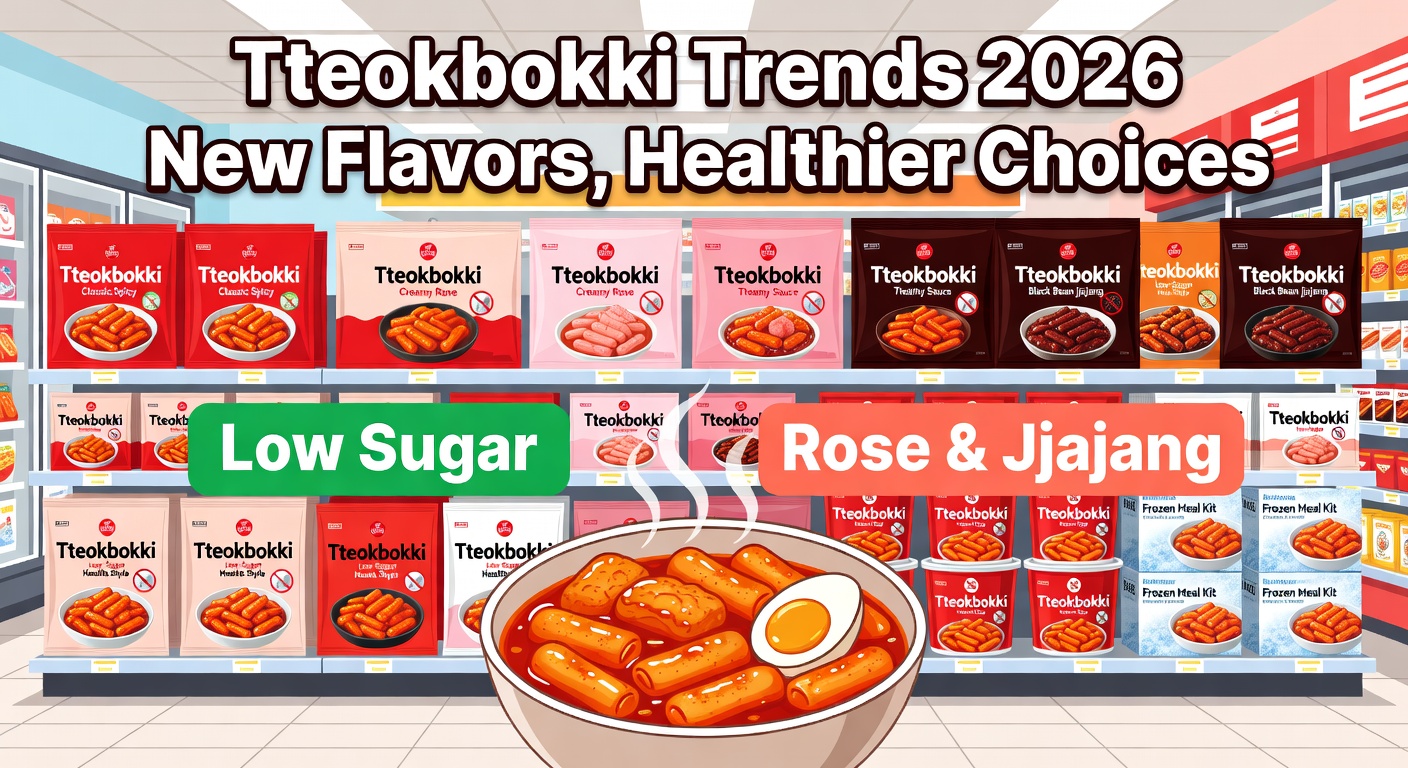
You are standing in a Korean convenience store, staring at a refrigerator shelf that now holds six different types of tteokbokki (떡볶이, spicy rice cakes) — low-sugar, cream-based, cup-sized, frozen meal kits — and wondering what happened to the simple street food you came to Korea for. The tteokbokki landscape has changed dramatically, and if you have not been paying attention since 2024, the options can genuinely overwhelm you.
This article breaks down what is actually new in Korea's tteokbokki scene right now, which healthy and fusion varieties are worth trying, where to find them, and how to make a simpler version at home. Whether you are an expat navigating convenience store aisles or a visitor building a food itinerary, this will help you sort signal from noise.
The Evolution of Tteokbokki: It Is Not Just the Red Spicy One Anymore
For decades, tteokbokki meant one thing: chewy rice cakes swimming in a fiery gochujang (고추장, red chili paste) sauce, served from a street cart or a small bunsik (분식, casual Korean snack restaurant) shop. That version still exists and still dominates — but the category around it has expanded fast.
According to market research from Spherical Insights, South Korea's tteokbokki market has maintained strong compound annual growth through 2024, with projections extending to 2033. The frozen tteokbokki segment alone reached roughly $495.7 million globally in 2024, with an estimated 8.1% annual growth rate through 2033, per a Dataintelo market report. Those numbers reflect something real: tteokbokki is no longer a street-cart-only food. It is a full product category spanning restaurants, franchises, convenience stores, and online retail.
🔗 Spherical Insights — South Korea Tteokbokki Market Report
What is driving this? A few things happened at once. The K-food wave brought international attention. Korean convenience store culture pushed ready-to-eat (RTE) meal innovation. And domestic consumer tastes shifted — younger Koreans started asking for lower sugar, more variety, and formats that work for solo dining. Many visitors find this confusing because the tteokbokki they researched before their trip looks nothing like what they encounter on the ground. The classic still exists, but it now sits alongside cream sauce, jjajang (black bean), rosé, and even protein-enriched versions.
So how did a simple street snack become an entire aisle? That starts with the health-conscious shift.
The Rise of Healthy Tteokbokki: Low-Sugar and Protein Options
Korea's "healthy pleasure" (헬시플레저) trend — the idea that better-for-you food should still taste satisfying — hit tteokbokki hard starting around 2024. The country's low-sugar food market grew from roughly 90 billion KRW in 2016 to over 300 billion KRW by 2022, according to Korean food industry analyses. Tteokbokki, historically one of the higher-calorie comfort foods, became an obvious target for reformulation.
The most visible example came in September 2025, when Dongdaemun Yeopgi Tteokbokki (엽기떡볶이), one of Korea's biggest tteokbokki franchise chains, rolled out a low-sugar version nationwide. The reported change: sugar content per serving dropped from around 32g to roughly 18g, with calories adjusted to the low 600-kcal range. GS25, a major convenience store chain, had already launched a no-added-sugar tteokbokki product in 2024.
🔗 GS25 Sugar-Free Tteokbokki Launch (Newdaily Biz)
A common point of confusion here: people assume that "low-sugar" or "healthy tteokbokki" means it is diet-friendly or suitable for specific health conditions. Based on nutrition reporting in Korean media, these products are better described as relatively lower in sugar compared to the original — not as genuinely low-calorie meals. The base is still rice cake, which is dense starch. Think of it as choosing a slightly lighter option within an indulgent category, not switching to a salad.
That said, the variety is genuinely useful if you are watching your intake. You now have realistic choices between a 900-calorie cheese-loaded franchise bowl and a 600-calorie convenience store cup. A few years ago, that choice did not exist.
The health-conscious shift also opened the door to other variations worth knowing about.
Popular New Tteokbokki Varieties You Will Actually See in Korea
If you walk through Myeongdong, Hongdae, or any major Korean food street in 2026, the tteokbokki menu boards look different from five years ago. Here is what you are likely to encounter and what each one actually is.
Rosé Tteokbokki (로제 떡볶이) remains the single biggest fusion hit. It blends gochujang with cream sauce, resulting in a milder, pinkish sauce that appeals to people who find traditional tteokbokki too spicy. It appeared around 2021-2022 and is now a permanent menu item at most franchise and convenience store brands.
Jjajang Tteokbokki (짜장 떡볶이) uses black bean paste instead of gochujang. It is savory rather than spicy, and it is especially popular among children and people who cannot handle heat at all.
Cheese Tteokbokki (치즈 떡볶이) layers mozzarella or processed cheese over traditional spicy tteokbokki. It is rich and heavy — more of an indulgent meal than a snack.
Chicken Tteokbokki (치킨 떡볶이) adds fried chicken pieces into the mix, essentially combining two of Korea's most popular comfort foods. Several franchise chains now offer this as a signature item.
Cup and Instant Tteokbokki (컵떡볶이) is the convenience store format — add hot water, wait a few minutes, eat. Quality has improved significantly since the early versions, and there are now dozens of flavor options from brands like Yopokki and CJ.
| Variety | Spice Level | Best For | Where to Find |
|---|---|---|---|
| Traditional (고추장) | Medium to High | Spice lovers, the authentic experience | Street vendors, bunsik shops |
| Rosé (로제) | Mild to Medium | First-timers, spice-sensitive eaters | Franchises, convenience stores |
| Jjajang (짜장) | None | Kids, anyone avoiding spice entirely | Franchises, some bunsik shops |
| Cheese (치즈) | Medium (under cheese) | Indulgent meal, sharing with friends | Franchises, dine-in spots |
| Low-Sugar (저당) | Varies | Calorie-conscious eaters | Select franchises, convenience stores |
| Cup/Instant (컵형) | Mild to Medium | Quick snack, hotel room, on-the-go | All convenience stores, online |
Where most visitors get tripped up is assuming all these varieties taste similar. They do not. Rosé and jjajang are completely different flavor profiles from traditional gochujang tteokbokki. If you only try one type and decide you do not like tteokbokki, you may have just picked the wrong variant for your palate.
Now, where should you actually go to try these?
Where to Find Trendy Tteokbokki in Korea
Franchise chains are the most consistent way to try new varieties. Dongdaemun Yeopgi Tteokbokki (엽기떡볶이) has hundreds of locations nationwide and has won Korea's top consumer brand award in the tteokbokki category for nine consecutive years, according to the brand. They carry both the classic fiery version and the newer low-sugar option. Tteokcham Tteokbokki (떡참떡볶이) earned the 2026 Korean Consumer Satisfaction Index award for differentiated menus in the bunsik category, reflecting the industry push toward variety.
🔗 Tteokcham Tteokbokki — 2026 Consumer Satisfaction Award (Hankyung)
Convenience stores (CU, GS25, 7-Eleven, Emart24) are where the RTE innovation happens fastest. New cup tteokbokki flavors rotate frequently, and limited editions tied to seasons or collaborations appear regularly. For visitors staying in hotels or guesthouses, this is the easiest and cheapest way to sample multiple varieties in one trip. Prices typically range from 1,500 to 3,500 KRW per cup.
Traditional markets and street vendors still serve the classic version, and for many visitors this remains the most memorable experience. Gwangjang Market in Seoul, Sindang-dong Tteokbokki Town (신당동 떡볶이 타운), and Tongin Market are well-known spots. The tteokbokki here tends to be the old-school style — thick red sauce, fish cakes, boiled eggs — without the fusion variations.
Online and delivery is how most Korean residents actually eat tteokbokki day-to-day. Apps like Baedal Minjok and Coupang Eats list dozens of tteokbokki restaurants with full menus. If you are an expat with a Korean phone number and address, delivery is often the most convenient option, especially for franchise orders.
One thing that catches visitors off guard: trendy tteokbokki spots in areas like Hongdae or Gangnam sometimes have significant wait times on weekends. Checking Naver Map reviews for real-time crowd info before heading out can save you frustration.
DIY: Making a Healthier Tteokbokki at Home
You do not need to be in Korea to try the newer tteokbokki styles. Frozen tteok (rice cakes) are available at most Asian grocery stores worldwide, and the global frozen tteokbokki market's rapid growth means ready-made sauce packets are increasingly easy to find online.
For a simpler, lower-sugar version at home, the key adjustment is the sauce. Traditional recipes call for a significant amount of gochujang plus sugar or corn syrup. You can reduce sweetness by cutting added sugar entirely and relying on the natural sweetness of onions and a small amount of rice syrup. Some recipes substitute part of the gochujang with doenjang (된장, fermented soybean paste) for a deeper, less sweet flavor.
A basic lighter tteokbokki recipe:
Start with 300g of rice cakes (soaked if frozen), a cup of anchovy or kelp broth, 2 tablespoons of gochujang, 1 tablespoon of gochugaru (고춧가루, red pepper flakes), a teaspoon of soy sauce, and half a teaspoon of rice syrup or honey instead of the usual 1-2 tablespoons of sugar. Add sliced onion, cabbage, and fish cake. Simmer until the rice cakes are soft and the sauce thickens — roughly 10-15 minutes.
For a rosé-style version, reduce the gochujang to 1 tablespoon and add 3-4 tablespoons of heavy cream or a milk-based sauce near the end of cooking. This creates the milder, pinkish sauce that made rosé tteokbokki a sensation.
For added protein, stir in boiled eggs, sliced chicken breast, or tofu cubes during the last few minutes. This is essentially what the "protein tteokbokki" products in Korean stores are doing — adding a protein source to offset the carb-heavy base.
The most common first-time mistake is overcooking the rice cakes. Rice cakes go from perfectly chewy to mushy in a surprisingly narrow window. Pull them off the heat while they still have some firmness — they will continue softening in the residual heat.
The Global Picture: Why Tteokbokki Is Everywhere Now
Beyond your kitchen, the larger shift is happening at the export level. Korea's Ministry of Agriculture, Food and Rural Affairs has positioned tteokbokki as a core K-food export item, and the results are visible. Major brands like Bibigo (CJ Group) have aggressively expanded tteokbokki products internationally, with coverage in The Korea Times highlighting the brand's role in the global K-food push.
🔗 Bibigo's Tteokbokki Sparks Global K-food Craze (Korea Times)
The Hallyu effect — K-dramas, K-pop, and Korean content on social media — continues to be the primary demand driver internationally. But it is worth noting that what works domestically in Korea does not always translate directly. Spice tolerance varies enormously by country, and some markets respond better to milder or fusion versions. The rosé and cheese varieties, for instance, tend to perform better in markets where extreme spice is less familiar.
For expats living in Korea, this globalization means tteokbokki products will follow you home whenever you eventually leave — but the freshly made versions from bunsik shops and street vendors are still difficult to replicate abroad. If tteokbokki is on your Korea food list, eating it here is still the definitive experience.
Conclusion
Tteokbokki in 2026 is a broader category than most visitors expect. The traditional spicy version is still the heart of the dish, but low-sugar options, fusion flavors like rosé and jjajang, convenient cup formats, and protein-enriched versions have all become mainstream. If you are visiting Korea, try at least two different types before deciding whether tteokbokki is for you. If you are already living here, the convenience store aisle is worth revisiting — the product quality and variety have improved meaningfully in the past two years. And if you are cooking at home, small sauce adjustments can shift tteokbokki from a heavy indulgence to a more balanced meal without losing the core appeal.
Frequently Asked Questions
Q. What does tteokbokki taste like for first-timers?
Traditional tteokbokki is sweet, spicy, and slightly savory, with a chewy rice cake texture that has no direct Western equivalent. The sauce is thick and coats everything — think of it as a bold, gochujang-driven comfort food. If you are sensitive to spice, rosé or jjajang versions offer the same chewy rice cake experience without the heat.
Q. Is low-sugar tteokbokki actually healthy?
It is lower in sugar compared to the traditional version — for example, some franchise products reduced sugar per serving from about 32g to 18g — but it is still a carb-heavy, moderately high-calorie dish. Think of it as a lighter option within the tteokbokki category, not a health food. Always check the actual nutrition label if you have specific dietary goals.
Q. Where is the best place to eat tteokbokki in Seoul?
Sindang-dong Tteokbokki Town near Sindang Station is the most iconic spot, with multiple restaurants specializing in the dish since the 1950s. For franchise variety and newer flavors, Hongdae and Myeongdong have many options. Convenience stores across the city carry quality cup tteokbokki if you want to sample quickly and cheaply.
Q. Can I buy Korean tteokbokki outside Korea?
Yes — frozen tteokbokki and sauce kits from brands like Yopokki, Bibigo, and Samyang are available at Asian grocery stores in most major cities and through online retailers. The global frozen tteokbokki market has been growing at about 8% annually, so availability continues to improve. Quality is decent, though freshly made versions in Korea remain noticeably better.
Q. What should I order with tteokbokki at a Korean restaurant?
Most bunsik shops serve tteokbokki alongside gimmari (김말이, seaweed-wrapped glass noodle rolls), twigim (튀김, assorted fried items), sundae (순대, Korean blood sausage), and odeng (오뎅, fish cake skewers in broth). Ordering a combination set is common and gives you a range of textures and flavors. The fish cake broth is usually free and served as a side soup.

Korea Travel Guide Creator
Practical Korea travel, food, and culture guides for foreign visitors.
View all posts →