Spring in Korea 2026: Cherry Blossom Guide, Festivals & Travel Tips
If you're trying to figure out when exactly to book flights and hotels for cherry blossom season in Korea, you're already running out of time. Bloom dates shift by just a few days each year, and the window between first bloom and full petal drop is brutally short — miss it by a week and you'll see bare branches instead of pink canopies.
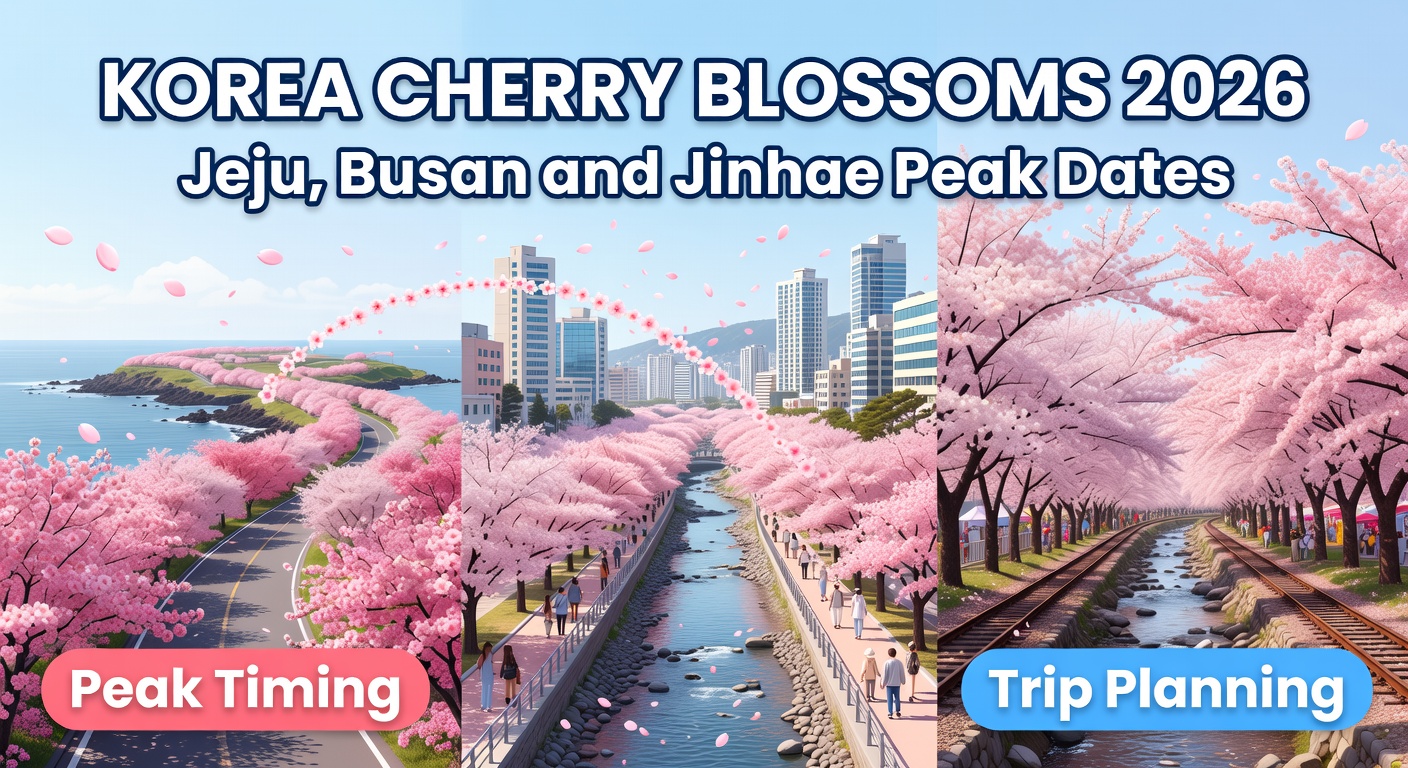
Here's what's confirmed for 2026: cherry blossoms are arriving 2–3 days earlier than the historical average, with Jeju opening the season around March 20, the southern coast following by March 23, and Seoul reaching full bloom around April 7. The two biggest festivals — Jinhae Gunhangje (March 27–April 5) and Yeouido Spring Flower Festival (April 8–12) — have locked in their dates. This article breaks down exactly when to go, how to get there without sitting in traffic for hours, and what most first-timers get wrong.

When Do Cherry Blossoms Actually Bloom? The 2026 Forecast
Korea's cherry blossom season doesn't happen all at once. It rolls north like a slow wave, starting from Jeju Island in mid-March and reaching Seoul about two weeks later. According to forecasts from the Korea Meteorological Administration and the Korea Forest Service, the 2026 timeline looks like this:
| Region | First Bloom | Full Bloom (est.) | Best Festival |
|---|---|---|---|
| Jeju Island | ~March 20 | March 25–28 | Jeju Cherry Blossom Festival |
| Jinhae / Busan | ~March 23 | March 30–April 3 | Jinhae Gunhangje (Mar 27–Apr 5) |
| Gyeongju | ~March 25 | April 1–5 | Bomun Lake cherry blossom walk |
| Seoul (Yeouido) | ~April 1 | April 7–10 | Yeouido Spring Flower Festival (Apr 8–12) |
One thing many people find confusing: "first bloom" and "full bloom" are not the same thing. First bloom means a handful of flowers have opened on the official observation tree. Full bloom — when about 80% of buds are open and the trees look like the photos you see online — usually comes 5–7 days later. If you arrive on the first bloom date expecting a pink tunnel, you'll be disappointed.
The other catch is that full bloom lasts only 4–7 days before petals start falling. Rain or strong wind can cut that window even shorter. The safest strategy is to check the Korea Meteorological Administration's real-time bloom updates about a week before your trip and adjust if needed.
🔗 KMA Cherry Blossom Forecast Map
That said, spring in Korea isn't only about cherry blossoms — and if you arrive before the trees bloom, you won't leave empty-handed.
Before the Cherry Blossoms: Plum Blossoms and Canola Fields
Korea's spring flower calendar actually starts in early March. The Gwangyang Maehwa (Plum Blossom) Festival ran March 13–22, 2026, turning the Seomjin River valley into a white-and-pink corridor. Plum blossoms are smaller and more fragrant than cherry blossoms, and the festival draws a fraction of the cherry blossom crowds.
Down on Jeju Island, bright yellow canola flowers (유채꽃, yuchae-kkot) blanket the fields from mid-March through April. The contrast of canola fields against Jeju's volcanic oreums (small volcanic cones) is one of the most photographed spring scenes in Korea. Unlike cherry blossoms, canola flowers stick around for weeks, so timing is much more forgiving.
If your trip falls in the first half of March, these are genuinely worth building an itinerary around — not just consolation prizes for missing the cherry blossoms. But once late March hits, the cherry blossom festivals take over everything.
The Two Big Festivals: Jinhae vs. Yeouido
These are the headliners, and choosing between them (or fitting in both) is one of the first decisions you'll need to make.
Jinhae Gunhangje (진해 군항제) — March 27 to April 5
Jinhae is a small district in Changwon, about an hour from Busan by bus. During the 10-day Gunhangje festival, over 350,000 cherry trees bloom along the streets, around the naval base, and most famously along Yeojwacheon Stream — the spot where cherry petals float on the water surface.
The scale is hard to overstate. Jinhae during Gunhangje is essentially an entire town wrapped in cherry blossoms. But that also means crowds are intense on weekends. Based on reviews and visitor reports, weekend afternoons can mean 2–3 hour waits just to reach the main photo spots. The festival runs shuttle buses (Red Line and Blue Line loops) to ease congestion, and the main roads are closed to private vehicles.
🔗 Jinhae Gunhangje 2026 Schedule & Shuttle Info
Best strategy: Visit on a weekday, arrive before 9 AM, and plan to stay overnight in Changwon or Busan rather than trying a day trip from Seoul.
Yeouido Spring Flower Festival (여의도 봄꽃축제) — April 8 to 12
Yeouido is the easier option if you're based in Seoul. The festival runs along a 1.7 km walking path behind the National Assembly building, lined with over 1,800 cherry trees. An estimated one million visitors come during the five-day run, according to Seoul city data.
🔗 Visit Seoul — Yeouido Festival Guide 2026
Access is straightforward: take Subway Line 5 or 9 to Yeouinaru Station, Exit 1. Vehicle access is restricted along the festival route (April 6–13 in 2026), so don't even think about driving. The festival itself is free.
Where people commonly get tripped up: they assume Yeouido is the only cherry blossom spot in Seoul. Seokchon Lake near Lotte World and Seoul Forest in Seongdong-gu are strong alternatives with smaller crowds. If Yeouido looks impossibly packed on the day you planned, pivot to one of these.
Beyond the Big Two: Quieter Cherry Blossom Spots
If you're the type who'd rather skip the festival crowds entirely, Korea has plenty of beautiful cherry blossom spots that don't make it onto most tourist itineraries.
Gyeongju is a strong pick if you want history alongside the blossoms. The area around Bomun Lake and the walk through Hwangnidan-gil (황리단길) combine Silla-era ruins, traditional hanok cafes, and tree-lined streets. It's a different mood from the pure-spectacle festivals — slower, more atmospheric. Take the KTX to Singyeongju Station and bus from there.
Gapyeong, about an hour northeast of Seoul on the Gyeongchun Line, has a cherry blossom–lined rail path that's increasingly popular but still manageable on weekdays. The combination of riverside paths and surrounding mountains makes it feel more remote than it actually is.
Let's Run Park Seoul (formerly Seoul Racecourse) in Gwacheon is another underrated option. It has wide-open grounds, easy parking (around ₩6,000 for the day), and far less congestion than Yeouido. It's accessible via Subway Line 4 to Seoul Racecourse Park Station.
For travelers on Jeju Island, skip the organized cherry blossom spots and instead drive or cycle along the roads between Seogwipo and Hallasan's lower slopes. The combination of cherry blossoms, canola flowers, and ocean views in the background is something the mainland can't match.
Getting Around: Transport That Actually Works
Spring festival weekends in Korea are a logistical crunch. Here's what works and what doesn't.
KTX (high-speed rail) is the backbone for reaching Jinhae, Gyeongju, or Busan from Seoul. Book early — KTX tickets to these routes sell fast during cherry blossom season, and early-bird discounts disappear weeks in advance. Seoul to Changwon (for Jinhae) takes about 2.5 hours; Seoul to Singyeongju is under 2 hours.
Subway is the clear winner for Seoul-based spots. Yeouido, Seokchon Lake, and Seoul Forest are all directly on subway lines. Do not drive to any of these — parking is either nonexistent or requires arriving before 7 AM.
Festival shuttle buses run at Jinhae (Red and Blue Line loops connecting the major spots) and are the most practical way to get between Yeojwacheon Stream, Gyeonghwa Station, and the naval base area. Maps are posted at the festival entrance and at major bus stops.
A common mistake people make is assuming they can rent a car and drive between spring festival sites comfortably. Main roads near Jinhae and Yeouido are either closed to vehicles entirely or gridlocked. Public transit and walking are genuinely faster during peak festival days.
Gangwon-do and Jeju: Spring Beyond the Festivals
Not everyone visiting Korea in spring wants to chase cherry blossoms, and that's completely fair. Two regions stand out for a different kind of spring trip.
Jeju Island
Jeju in late March through April is mild, green, and uncrowded compared to summer. The canola flower fields along Noksan-ro Road are the classic spring image, but the real draw for active travelers is oreums — the 360+ small volcanic cones scattered across the island. Sunrise hikes up Yongmeori or Saebyeol Oreum take under an hour and offer panoramic views without the effort of a full Hallasan climb.
Jeju is also where you can combine beach time (water's still too cold for swimming, but the coastal walks are stunning) with flower viewing. Seogwipo's Cheonjiyeon area is particularly green in spring.
Gangwon-do
The east coast — Sokcho, Gangneung, and the Seoraksan area — is excellent for a spring workation or a slower-paced trip. Anmok Beach Coffee Street in Gangneung has become a destination in its own right: a strip of ocean-view cafes where you can sit with a drip coffee and watch the East Sea. It's a 2-hour KTX ride from Seoul.
Seoraksan National Park reopens hiking trails in spring (some close during winter). The lower trails are manageable for beginners and gorgeous when the mountain azaleas bloom in mid-to-late April.
For hikers looking for something more ambitious, sections of the East-West Trail (동서트레일) connecting the east and west coasts of Korea pass through Gangwon-do and are best attempted in spring or fall.
What to Pack and Prepare
Spring weather in Korea is deceptive. Daytime temperatures can reach 18–22°C, but mornings and evenings drop to 5–8°C. The temperature swing catches a lot of visitors off guard.
One more thing worth noting: do not touch or shake the cherry blossom trees. It's a genuine etiquette issue at Korean festivals. Signs are posted everywhere, but every year visitors break branches for selfies. Festival staff and other visitors will call you out, and it's an easy way to ruin the experience for yourself and others.
How to Spend a Spring Day Like a Local
Cherry blossom viewing in Korea isn't just about walking under trees. The local approach involves turning it into a full picnic event. Groups of friends or families stake out spots under the trees with picnic mats, order fried chicken and beer (치맥, chimaek) for delivery, and spend the afternoon eating, chatting, and people-watching.
If you want to do the same, convenience stores near festival sites stock picnic mats, wet wipes, and snacks. Chicken delivery works even to parks — just use the Baemin or Yogiyo app and pin your location on the map. It's one of those small cultural experiences that's easy to replicate and genuinely fun.
For a different kind of spring evening, the Han River parks (especially Yeouido Hangang Park, conveniently close to the cherry blossom festival route) are where Seoulites go after work to eat ramyeon from the riverside convenience stores, rent bikes, or just sit on the grass. The combination of river breeze, city skyline, and spring air is hard to beat.
Your Booking Timeline
If you haven't started planning yet, here's the honest picture:
For Jinhae/southern coast trips during the festival (March 27–April 5): accommodation and KTX tickets should ideally be booked by now. If you're flexible on weekdays, you may still find options, but weekend availability is very limited.
For Seoul/Yeouido (April 8–12): since most visitors are Seoul-based day-trippers, accommodation pressure is lower. But if you're traveling from outside Seoul, book your hotel by early April at the latest.
For Jeju or Gangwon-do spring trips: more flexibility here. These regions don't have the same single-week crunch, so booking 1–2 weeks ahead is usually fine outside of major Korean holidays.
Most cherry blossom festivals, including Jinhae and Yeouido, are free admission. Your main costs are transport, food, and accommodation. A realistic budget for a 1-night/2-day cherry blossom trip from Seoul to Jinhae runs around ₩130,000–160,000 per person (KTX ₩30,000–40,000, accommodation ₩50,000–70,000, meals and incidentals ₩40,000–50,000). Festival dates, shuttle routes, and road closure zones can shift year to year — confirm the latest details on the official Changwon city and Visit Seoul websites before finalizing your plans.
Frequently Asked Questions
Q. When is the best time to see cherry blossoms in Seoul 2026?
Seoul's cherry blossoms are expected to reach full bloom around April 7–10, 2026, which is 2–3 days earlier than the historical average. The Yeouido Spring Flower Festival runs April 8–12, timed to overlap with peak bloom. For the best experience, visit on a weekday morning during this window.
Q. How do I get to Jinhae cherry blossom festival from Seoul?
Take the KTX from Seoul Station to Changwon (about 2.5 hours), then transfer to a local bus heading to Jinhae. During the Gunhangje festival (March 27–April 5), shuttle buses run loop routes within Jinhae connecting all major viewing spots. Driving is not recommended — main roads are closed to private vehicles during the festival.
Q. Are Korea cherry blossom festivals free?
Yes, nearly all cherry blossom festivals in Korea — including Jinhae Gunhangje and the Yeouido Spring Flower Festival — are free to enter. Your main expenses will be transportation, food, and accommodation. Some peripheral venues like Let's Run Park charge a small parking fee (around ₩6,000) but no admission.
Q. What flowers bloom in Korea before cherry blossom season?
Plum blossoms (매화, maehwa) open in early-to-mid March, with the Gwangyang Maehwa Festival typically running in the second and third weeks of March. On Jeju Island, canola flowers (유채꽃) bloom from mid-March through April. Both are worth visiting and far less crowded than cherry blossom events.
Q. How long do cherry blossoms last in Korea?
Full bloom typically lasts only 4–7 days in any given location before petals begin to fall. Rain or strong wind can shorten this window significantly. Since bloom moves from south to north over about two weeks, you can extend your viewing window by starting in Jeju or Jinhae and moving toward Seoul — but each individual city's peak is very brief.

Korea Travel Guide Creator
Practical Korea travel, food, and culture guides for foreign visitors.
View all posts →